 A.Jathindra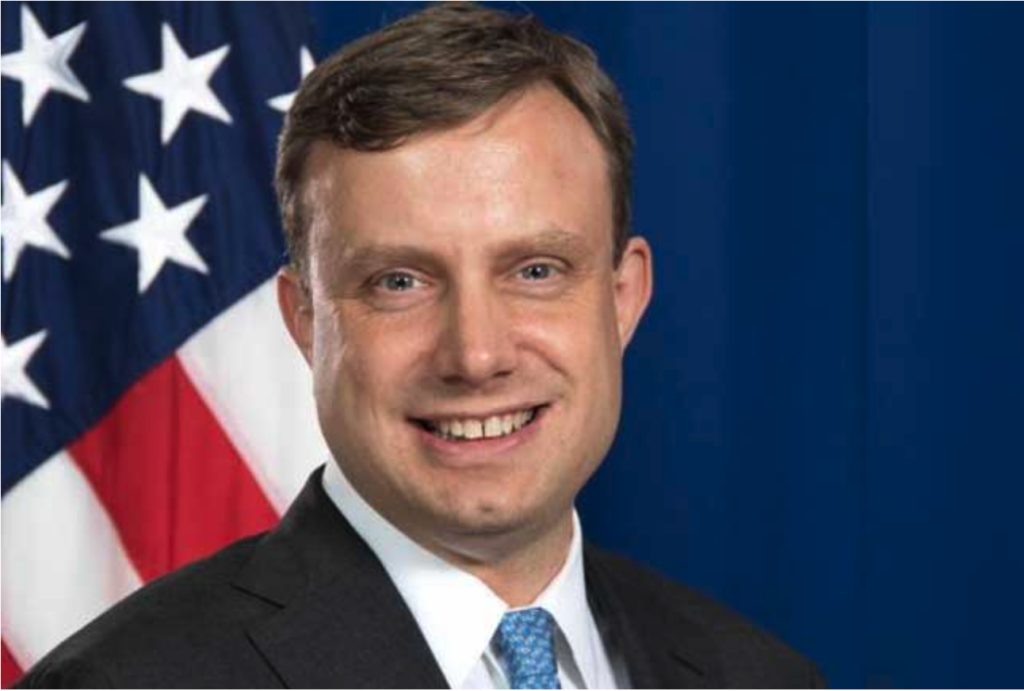
Amid the intensifying U.S.–China rivalry in the Indian Ocean, career diplomat Eric S. Meyer was sworn in this week as the new U.S. Ambassador to Colombo. Known for his emphasis on countering Chinese influence, Meyer’s appointment — first made by President Donald Trump in July 2025 but delayed by the Senate confirmation process — comes at a pivotal juncture. His arrival coincides with that of China’s newly appointed envoy, Wei Huaxiang, designated Ambassador Extraordinary and Plenipotentiary by President Xi Jinping. Upon his arrival in Colombo on August 11, 2026, Wei affirmed that “China always takes Sri Lanka as a priority in its neighborhood diplomacy.”
Before taking up this post, Meyer served as a career member of the Senior Foreign Service, holding multiple roles across the State Department. His portfolio included Chief of Staff and Senior Advisor in the Bureau of South and Central Asian Affairs, Consul General and Acting Deputy Chief of Mission at the U.S. Embassy in Phnom Penh, Cambodia, Senior Advisor in the Office of Polar and Arctic Affairs, and overseas assignments in Finland, Egypt, and Argentina. Most recently, from January to August 2025, he served as Senior Bureau Official for South and Central Asian Affairs, overseeing 21 diplomatic posts across the region.
What will be Meyer’s main concern in Sri Lanka? During his opening statement before the Senate Foreign Relations Committee, Ambassador Eric Meyer underscored a sharp focus on the island’s geopolitical importance, emphasizing its pivotal role in the U.S. strategy to promote a free and open Indo-Pacific.
“Its strategic location makes it a focal point for U.S. efforts to promote a free and open Indo-Pacific and counter adversarial influences, including China’s growing presence in the region. If confirmed, I will lead government and industry partners to promote and protect U.S. security and commercial interests in the Indian Ocean region,” Meyer said.
Sri Lanka’s place in U.S. strategic calculations has grown sharper under the lens of U.S–China rivalry. During Trump’s first term, then–Secretary of State Mike Pompeo visited Colombo in October 2020 and warned that China was “preying” on the country. “We see from bad deals, violations of sovereignty and lawlessness on land and sea that the Chinese Communist Party is a predator, and the United States comes in a different way — we come as a friend and as a partner,” Pompeo declared at a televised press conference.
Less than a week before the November 3 U.S. presidential election, Secretary of State Mike Pompeo embarked on a five-day trip aimed squarely at countering Chinese influence in Asia. During the visit, he announced that Washington would open an embassy in the Maldives — a move signaling its intent to challenge Beijing’s foothold in South Asia. After a two-day stop in New Delhi alongside Defense Secretary Mark Esper, Pompeo traveled to Sri Lanka, underscoring how Washington and New Delhi are increasingly aligned in their efforts to curb China’s expanding presence in the Indian Ocean region.
After President Gotabaya Rajapaksa assumed office in 2019, he told Indian media that the previous government’s decision to lease Hambantota Port to China for 99 years was a mistake and suggested renegotiation. However, no evidence emerged that Rajapaksa pursued such a move during his tenure.
The Hambantota Port — leased to China for 99 years — has become emblematic of Beijing’s expanding footprint and a point of concern for Washington’s strategic community. U.S. officials, including Vice President Mike Pence, have cautioned that Hambantota could evolve into a forward operating base for China’s blue-water navy. Colombo has consistently rejected such claims, with then Prime Minister Ranil Wickremesinghe dismissing them as “imaginary Chinese naval bases.” Yet, within the dynamics of great-power rivalry, history offers little certainty: intentions are rarely transparent, and strategic objectives are not reliant on official assurances.
At Meyer’s Senate hearing, Committee Chairman Jim Risch described Sri Lanka as “a poster child around the world for why people do not do business with China.” Meyer responded by pledging to work with Colombo to safeguard sovereignty over its ports.
The $1.5 billion deepwater port, leased to China Merchants Port Holdings for $1.12 billion, remains central to Beijing’s Belt and Road Initiative. For Washington, the deal symbolizes how China uses money diplomacy to entrench itself in smaller nations, raising alarms about sovereignty and strategic vulnerability.
Since independence, Sri Lanka has often emphasized neutrality in its foreign policy. Yet during the Rajapaksa era, China emerged as a dominant partner, deeply rooted through large-scale strategic projects. Hambantota became the crown jewel of Beijing’s moves, pulling Sri Lanka directly into the U.S–China rivalry despite Colombo’s stated desire to avoid big-power entanglements.
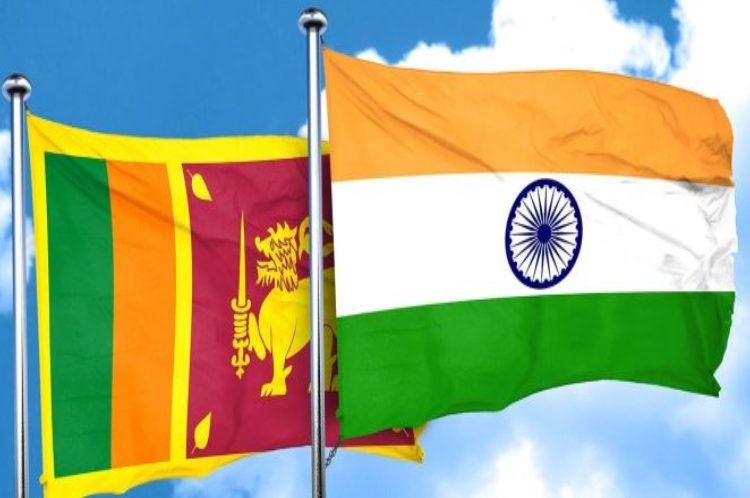
The question now is how the JVP-led National People’s Power government will cooperate with Washington to ensure “sovereignty over ports.” President Anura Kumara Dissanayake has said, “We don’t want Sri Lanka to be sandwiched, especially between China and India.” But unless the government renegotiates the Hambantota issue, the island risks exactly that fate. His description of both India and China as “valued friends” suggests Colombo intends to maintain strong ties with Beijing — a challenge Ambassador Meyer will have to confront.
China’s growing influence in Sri Lanka is an immediate concern for India as the resident power in the region, but it is also a global concern for the United States. In Washington’s strategic framing, countering China in the Indian Ocean means both safeguarding India’s pre-eminent position in South Asia and containing Beijing’s expanding reach.
Sri Lanka’s future will be shaped by how Colombo navigates this competitive environment.
 Soraya M. Deen