 Daiju Wada
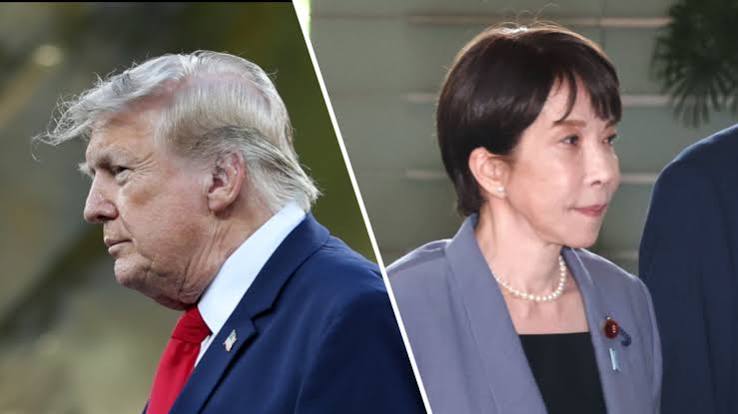
The 3 November 2026 US midterm elections saw the Democratic Party regain control of both chambers of Congress, dealing a major defeat to the Republican Party and President Donald Trump. Disputes over budgets, legislation, presidential appointments and congressional investigations are therefore likely to intensify, making it harder for Trump to advance his domestic agenda during the final two years of his term.
Yet Japan should not assume that the president’s influence will simply decline. Political constraints at home could encourage Trump to focus more heavily on foreign policy and the pursuit of a presidential legacy. With the 2028 election approaching, visible diplomatic achievements could help him demonstrate that he has reshaped America’s place in the world. Although Congress retains important powers over spending, oversight and treaty ratification, presidents generally have greater room for manoeuvre in diplomacy than in many areas of domestic policy.
Trump has previously shown a preference for leader-to-leader diplomacy. A renewed opening to North Korea or a major agreement with China could offer him precisely the kind of high-profile result he seeks. Japan’s concern, however, is that an agreement pursued for its symbolic value might not adequately reflect the security interests of US allies. Two issues deserve particular attention.
The first is the possibility of a US initiative towards North Korea that proceeds without sufficient coordination with Japan and South Korea. During his first administration, Trump held three high-profile meetings with North Korean leader Kim Jong Un: the Singapore summit in 2018, the Hanoi summit in 2019 and their meeting at Panmunjom later that year. The Hanoi summit ended without agreement, as the two sides failed to bridge their differences over denuclearisation and sanctions relief.
A renewed summit could appeal to Trump as an opportunity to demonstrate diplomatic success. On 16 November, he reportedly raised the possibility of meeting Kim and asked the Chinese side to invite the North Korean leader. If talks resume, the central question for Japan will not be whether Washington engages Pyongyang, but what kind of agreement it seeks.
One possible risk is that the United States might prioritise limits on capabilities that threaten its own territory, such as nuclear testing and intercontinental ballistic missile development, while accepting the continued existence of North Korea’s nuclear arsenal and its shorter-range missiles. Such an arrangement might be presented as progress, even though it would leave Japan exposed to serious threats. It could also marginalise issues that are central to Tokyo, including the abduction of Japanese citizens by North Korea. Any negotiations that affect regional security should therefore be closely coordinated with Japan and South Korea, rather than conducted as a largely bilateral US-North Korea process.
The second concern is that Taiwan could become a bargaining chip in a broader US-China deal. Washington and Beijing have substantial reasons to seek a more stable relationship. Trade, tariffs, advanced technology and supply chains remain sources of tension, but an agreement addressing several of these issues could give Trump a major diplomatic and economic achievement. Beijing, for its part, has an interest in reducing external pressure and securing a more favourable environment for its economic development.
The danger for Japan is that Taiwan-related issues could be included in such negotiations. China opposes US arms sales to Taiwan and American political engagement with the island. The United States, under the Taiwan Relations Act, supports Taiwan’s ability to maintain sufficient self-defence capabilities.
If Trump places a high priority on economic gains or a summit-level agreement with China, he could consider accommodating some Chinese demands, for example by restraining arms sales or reducing the visibility of US political support for Taiwan. This does not mean that Washington will abandon its existing policy or accept Beijing’s position. Nevertheless, the possibility that Taiwan could be treated as a negotiable element of the wider US-China relationship is a serious concern for Japan.
Peace and stability across the Taiwan Strait are directly connected to Japan’s security. A crisis would affect the security of Japan’s southwestern islands, the use of US military facilities in Japan, regional maritime routes and supply chains for critical goods such as semiconductors. A perceived reduction in US commitment could also encourage Beijing to increase military and diplomatic pressure, making the regional security environment more difficult.
Japan therefore needs to ensure that Taiwan is not treated solely as a bilateral issue between Washington and Beijing. Tokyo should communicate this point consistently while supporting peaceful management of cross-strait differences.
The Takaichi administration faces a difficult balancing act. The US-Japan alliance remains the cornerstone of Japan’s security, and a weakening of ties with Trump would not be a realistic response to uncertainty in Washington. Japan should maintain close relations with the president while continuing to stress the importance of US engagement in the Indo-Pacific. This requires practical cooperation in defence, economic security and intelligence, as well as sustained coordination with South Korea.
At the same time, Japan should strengthen its own defence capabilities and deepen security cooperation with Australia, the Philippines and Southeast Asian partners. A broader network of partnerships would help preserve regional stability if US priorities shift or Washington becomes more inward-looking.
The post-midterm period may thus produce an apparent paradox: a president weakened in domestic politics could become more ambitious in diplomacy. Japan should neither oppose diplomatic engagement for its own sake nor welcome every agreement as an achievement. Its task is to maintain a strong relationship with Washington while making clear that progress with North Korea and China must not come at the expense of Japan’s security, the abduction issue or stability across the Taiwan Strait.
Daiju Wada is a distinguished political scientist and geopolitical risk expert specialising in international security, counter-terrorism, and economic security. Based in Singapore, he serves as a Distinguished Professor at PRIME GLORY PTE. LTD and as a Senior Research Fellow at the Trinco Centre for Strategic Studies (TCSS). Recognised for his expertise in strategic affairs and global risk analysis, he contributes as an external expert to leading geopolitical advisory organisations, including Oxford Analytica and Gatehouse Advisory Partners. As Chief Executive Officer of Strategic Intelligence, he provides high-level geopolitical intelligence, strategic forecasting, and risk assessments to international consulting firms, businesses, and policy stakeholders operating in an increasingly complex global environment.


 Soraya M. Deen