
 Dr. Yashwant Singh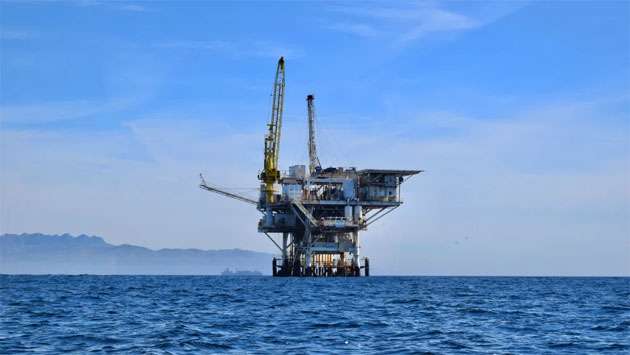
Energy has become a strategic instrument in the Indian Ocean, and few bilateral relationships illustrate this more clearly than that of India and Sri Lanka. Both nations sit astride vital maritime routes while remaining heavily dependent on imported fuel. Against this backdrop, joint exploration of offshore hydrocarbons in the Mannar Basin could evolve into something considerably larger than a commercial venture: an energy-security initiative, an industrial-development programme, a maritime-security partnership, and a mechanism for deepening India’s strategic footprint in its immediate neighbourhood.
This potential should not be mistaken for proven commercial promise. Sri Lanka has confirmed the existence of a working petroleum system in the Mannar Basin, but no discovery has yet reached commercial production. Exploration remains technically demanding, capital-intensive, and environmentally sensitive. The central argument here is therefore not that India and Sri Lanka should simply search for oil together, but that a carefully structured partnership, linking exploration to gas infrastructure, maritime security, and regional connectivity, could generate strategic returns considerably larger than the underlying hydrocarbon discovery itself.
The Resource Base and Its Limits
The Mannar Basin is a frontier offshore basin straddling the maritime space between the two countries. Exploration by Cairn Lanka in 2011 produced natural-gas and condensate discoveries at the Dorado and Barracuda wells, confirming the presence of hydrocarbons without establishing their commercial viability. In May 2025, Sri Lanka’s Cabinet approved licensing for four new Mannar blocks, aiming not only to attract capital but to build a domestic petroleum workforce and industry. In a latest development, on August 25, 2026, Sri Lanka, through the Petroleum Development Authority of Sri Lanka (PDASL), invited qualified international energy companies to explore and potentially develop oil and natural gas across four offshore blocks in the Mannar Basin.
A 2025 US Geological Survey assessment estimated mean undiscovered, technically recoverable resources across assessed India-Sri Lanka basins at roughly 1.0 billion barrels of oil and 53.4 trillion cubic feet of gas. Latest estimates by Sri Lankan authorities indicate that the Mannar Basin could hold around 2 billion barrels of petroleum and 9 trillion cubic feet of natural gas, based on available geological data. This is an aggregate geological estimate, not a forecast of commercially recoverable reserves specific to Mannar, and should not be treated as an assured resource base. The eventual commercial case will hinge on reservoir quality, recoverability, water depth, drilling success rates, gas prices, and the fiscal terms under which development proceeds.
Complementary Strengths
India brings advantages that make it a logical partner. Indian firms, particularly ONGC and ONGC Videsh, have accumulated relevant expertise in the adjacent Cauvery Basin and in offshore drilling, seismic acquisition, and subsea engineering more broadly. A joint model could lower Sri Lanka’s information and execution costs, combining Sri Lankan acreage and sovereign authority with Indian technical capacity and capital access, ideally within a competitively licensed consortium rather than a purely state-to-state arrangement, since governments are better suited to providing regulatory certainty than to absorbing commercial risk.
Economic Stakes for Sri Lanka
For Colombo, the appeal rests on several fronts. Domestic gas production could reduce the foreign-exchange burden of fuel imports and ease balance-of-payments pressure, though the scale of any saving depends entirely on the volume eventually proven. Royalties and production-sharing revenues could strengthen public finances, provided Sri Lanka avoids the classic resource-governance trap of budgeting for revenue before viability is established; transparent licensing, independent regulation, and revenue-management safeguards would be essential. Beyond direct revenue, hydrocarbon development could seed a wider industrial ecosystem (offshore services, fabrication, geophysical survey, and logistics) alongside the workforce-development goals (education and training, skilling, talent retention, local capacity-building, etc.) already built into Sri Lanka’s licensing programme.
Trincomalee as the Strategic Multiplier
The most significant economic value may lie not in exploration itself but in linking it to Trincomalee’s development as a regional energy hub. India and Sri Lanka have already advanced cooperation on the Trincomalee tank farm, with Colombo approving redevelopment of 24 tanks in the Upper Tank Farm through a joint framework involving the Ceylon Petroleum Corporation and Lanka IOC. In April 2025, India, Sri Lanka, and the UAE agreed a trilateral framework envisaging a possible India-Sri Lanka petroleum pipeline, tank-farm refurbishment, and regional bunker-fuel supply.
This matters because it de-risks the overall investment logic. If Mannar exploration succeeds, Trincomalee could provide storage, processing, and distribution infrastructure. If exploration disappoints, the same infrastructure retains value by supporting imported petroleum and LNG. Mannar exploration, in other words, need not stand alone as a speculative bet: it can be the upstream component of a broader energy system.
What India Gains
India’s interest differs from Sri Lanka’s but is complementary. Direct volumes from Mannar would be marginal against India’s overall energy demand, but geographic proximity still carries strategic value, and Indian firms stand to gain commercially across exploration, drilling, and infrastructure. More fundamentally, a stable and diversified Sri Lankan economy is itself a strategic asset for India, particularly after Sri Lanka’s 2022 economic crisis demonstrated how quickly instability in the neighbourhood can become a regional liability. India’s interest, then, is less about securing barrels and more about anchoring a resilient, commercially connected Sri Lanka within the wider Indian Ocean economy.
The Security Dividend
Offshore energy infrastructure requires continuous monitoring of platforms, pipelines, and shipping lanes, which would naturally deepen cooperation in maritime-domain awareness, hydrography, surveillance, and disaster response, areas India and Sri Lanka have already identified as priorities. Improved surveillance around energy assets would carry a secondary benefit in curbing smuggling, illegal fishing, and trafficking. Energy infrastructure could thus become dual-purpose: commercially productive in normal times and a source of maritime resilience during crises.
The China Factor, Handled Carefully
No assessment can ignore China’s economic footprint in Sri Lanka. India’s concern is less about any single Chinese commercial project than about avoiding strategic dependencies that could compromise the security environment along its coastline. A successful hydrocarbon partnership could anchor part of Sri Lanka’s energy infrastructure within an India-linked network, but New Delhi would be wise to avoid framing the project as an anti-China instrument. Sri Lanka values strategic autonomy and is unlikely to accept cooperation that appears to demand geopolitical alignment. The inclusion of the UAE in the Trincomalee framework already points toward a more durable model: a Sri Lankan-led, commercially competitive, regionally open initiative in which India is a central but not exclusive partner.
Boundaries, Sovereignty, and Environment
Hydrocarbon reservoirs do not respect maritime boundaries, and any structure straddling the India-Sri Lanka line would require mechanisms for data-sharing, unitisation, and revenue allocation. Sri Lanka will need to ensure such cooperation does not read as ceding control over its resources, making explicit provisions on sovereignty and data ownership essential.
Environmental risk is equally central. The Gulf of Mannar sustains fisheries and biodiversity that seismic surveys, drilling, and shipping could threaten, and coastal communities may view offshore development as a livelihood risk, a dynamic already visible in India’s own Gulf of Mannar licensing process, including Tamil Nadu’s political sensitivities around fisheries and coastal ecology. A credible joint framework would need baseline ecological surveys, spill-response protocols, fisheries-impact assessment, and transparent monitoring, not as a constraint on development, but as insurance against the kind of accident that could derail the entire programme.
Sequencing Commercial Risk
The central weakness of the proposition remains uncertainty: encouraging geology does not guarantee commercial production, and earlier discoveries went undeveloped partly because the economics did not work. A staged approach (geological survey, exploratory drilling, appraisal, phased development, and infrastructure integration) would prevent premature commitment of public capital, while a balanced fiscal regime would need to avoid both deterring investors with excessive state take and surrendering too much resource rent to them.
Beyond Hydrocarbons
Finally, hydrocarbon cooperation should not crowd out Sri Lanka’s substantial solar and wind potential, on which India and Sri Lanka are already cooperating through discussions on grid interconnection. Gas could play a transitional role complementing variable renewables, but the more durable model integrates gas, renewables, interconnection, storage, and petroleum logistics into a single diversified energy portfolio rather than treating hydrocarbons as the foundation of long-term policy.
Towards a Different Partnership
The value of India-Sri Lanka hydrocarbon cooperation lies less in the uncertain promise of oil beneath the seabed than in its capacity to connect energy security, industrial development, and Indian Ocean geopolitics into one framework. Sri Lankan resource sovereignty, competitive licensing, commercially borne risk, coordinated upstream-downstream development, and non-militarised security cooperation together offer a template in which even a modest discovery could yield outsized strategic returns, and in which failure to find commercial reserves would still leave behind valuable infrastructure, technical capacity, and bilateral trust.
Dr. Yashwant Singh is an Indian sociologist working at the intersection of urban studies, development, nature and geopolitics. He holds an M.Phil. in Sociology from the University of Delhi and a Ph.D. from the University of Hyderabad, and recently served as Assistant Professor of Sociology at GITAM (Deemed to be) University, Bengaluru. Alongside his academic work, his essays and analyses have been published across several international platforms, including Across Voices, Modern Diplomacy, Geostrategic Media, South Asia Journal, World Geostrategic Insights, and IA-Forum, where he offers sociological and analytical perspectives on global affairs, strategic developments, and the changing dynamics of contemporary societies.


 Dr. Yashwant Singh