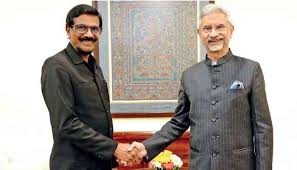
 Dr. Yashwant Singh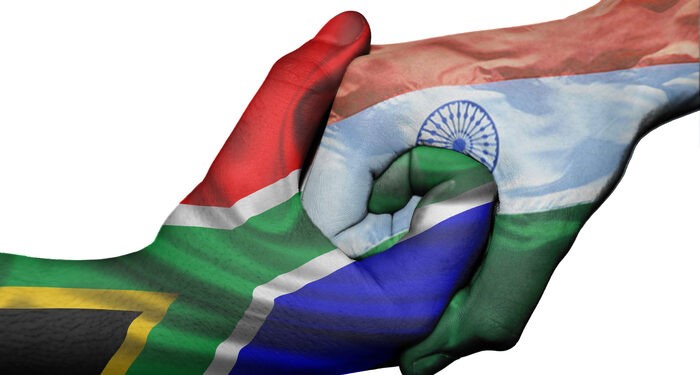
Every era of global disorder produces its own vocabulary of anxiety. Ours speaks of “de-risking,” “friend-shoring,” and “multipolarity” – terms that describe fragmentation without offering a theory of order. Europe is absorbed by a war of attrition on its eastern frontier; the Middle East oscillates between ceasefire and escalation; and the multilateral trading system, built on the premise of rule-bound interdependence, is being quietly hollowed out by unilateral tariffs and export controls. Africa sits at the intersection of these tremors, exposed to debt distress, climate shocks, and a scramble for its critical minerals that increasingly resembles the resource diplomacy of an earlier imperial century.
From Solidarity to Structure
Into this vacuum, India and Africa have an opportunity that is more structural than sentimental: to construct, along the western rim of the Indian Ocean, a maritime order that is neither a Western security umbrella nor a Chinese debt-financed archipelago, but a third form: an ecosystem of distributed capability owned by its own littoral states. This is not a call for a new bloc. Blocs invite counter-blocs. It is a call for what international relations theory would term a lattice rather than a hub-and-spoke system: a dense mesh of overlapping ties (naval, commercial, financial, medical, agricultural) robust enough that no single external power can occupy the position of indispensable node.
Beyond the Rhetoric of Solidarity
The India-Africa relationship inherits real capital from the Bandung generation: the Non-Aligned Movement, material and diplomatic support against apartheid, and a shared insistence on reforming a UN Security Council frozen in 1945. But post-colonial solidarity, treated as a self-executing asset, has historically decayed into ceremonial summitry. The scholarly literature on South-South cooperation, from the “Southern engagement” framework of Ian Taylor to the African Union’s own Agenda 2063, converges on one diagnosis: partnerships fail not for want of goodwill but for want of institutionalised delivery mechanisms.
India’s development-finance architecture already supplies raw material for such institutionalisation: concessional credit lines exceeding $12 billion and a training pipeline that has cycled well over 37,000 African participants through Indian technical and educational institutions. But instruments dispersed across ministries, exim banks, and ad hoc summits do not constitute a strategy. Strategy requires sequencing, geographic focus, and a theory of leverage. The Indian Ocean supplies all three.
Sea Power as the Organising Logic
Alfred Thayer Mahan’s century-old proposition, that command of the sea determines the fate of continental powers, remains analytically useful even as its imperial applications are rightly discredited. What Mahan under-theorised, and what India’s own 2015 “SAGAR” doctrine (Security and Growth for All in the Region) implicitly corrects, is that sea power in the 21st-century need not mean sea control by one actor. It can mean sea governance shared among littoral states possessing complementary, non-substitutable capabilities.
Roughly a third of global oil shipments and a substantial share of India’s and East Africa’s trade transit the western Indian Ocean’s shipping lanes, alongside undersea cables that carry the digital economy of both continents. This is not a peripheral maritime space; it is a load-bearing artery of the world economy, and its governance has historically defaulted to whichever external navy possessed the largest hull tonnage in the region.
India’s 2025 inaugural Africa-India Key Maritime Engagement (AIKEYME) exercise with Tanzania and eight other states, together with the IOS SAGAR deployment embarking naval personnel from nine African partners, should be read not as symbolic gestures but as the seed institutions of an alternative model: maritime domain awareness as a public good, generated by the Information Fusion Centre-Indian Ocean Region (IFC-IOR) and distributed to African coast guards, hydrographic offices, and disaster-management authorities rather than monopolised by a single external fleet.
The conceptual distinction that separates this from great-power naval competition is the difference between enabling and controlling architectures. A controlling architecture makes the client dependent on the patron’s sensors and platforms indefinitely. An enabling architecture transfers the sensor, trains the operator, and plans its own obsolescence. India’s comparative advantage, as a middle power without a colonial ledger to settle in Africa, is that it can credibly commit to the latter in a way great powers, bound by their own strategic possessiveness, generally cannot.
The Political Economy of Redundancy
The hardest analytical question is also the most practical one: how does a India-Africa maritime order survive attempts by outside powers to co-opt, dilute, or bypass it? Realist international relations offers a discouraging answer, that middle powers cannot resist great-power penetration through goodwill alone. But there is a subtler mechanism available: strategic redundancy as deterrence.
Coercive leverage over infrastructure typically depends on monopoly. A single-financier port, a single-supplier telecom backbone, or a single-donor health system can be weaponised, as African states have already discovered in disputes over debt-for-equity conversions and technology lock-in. The remedy is not exclusion of any external actor but multiplication of sources: African ports financed and operated through diversified consortia, maritime data pooled across regional fusion centres rather than a single foreign command, and technical personnel trained domestically rather than perpetually contracted from abroad. Diversification of dependence, in effect, functions as a substitute for the sovereignty that thin, single-patron infrastructure quietly erodes.
This is where an India-Africa Resilience Fund, blending Exim Bank credit, African sovereign co-investment, and private capital, could do analytically distinct work from either Western concessional aid or Chinese state-directed lending. Its mandate should be narrow but disciplined: co-financing only projects with African majority equity pathways, mandatory local-employment and skills-transfer clauses, and joint evaluation mechanisms, converting each investment from a bilateral transaction into a governance precedent.
Four Sectoral Pillars
Food security is the most under-exploited domain. India’s post-Green Revolution experience in seed research, minor irrigation, and decentralised storage maps unusually well onto African agro-ecological diversity, provided cooperation moves beyond commodity transfer toward joint agricultural research stations and farm-mechanisation manufacturing located on African soil.
Health security, dramatised by the postponement of the fourth India-Africa Forum Summit amid a regional public-health emergency, illustrates how epidemiological shocks now function as geopolitical variables. India’s vaccine-manufacturing base and Africa CDC’s continental disease-surveillance architecture are structurally complementary; the strategic task is to convert India’s role from vaccine supplier to co-manufacturer, embedding fill-finish and eventually active-ingredient production within Africa itself.
Green industrialisation offers the clearest complementarity of factor endowments: African critical-mineral reserves and renewable-resource potential paired with India’s demonstrated capacity for affordable solar deployment at continental scale (39 African states already participate in the India-anchored International Solar Alliance). The strategic error to avoid is replicating an extractive pattern in green disguise; the corrective is joint investment in midstream processing and battery-material value chains sited in Africa, not merely raw-material offtake agreements.
Digital infrastructure, drawing on India’s own India Stack experience, must be transferred as open, locally governed architecture rather than proprietary platforms, otherwise digital dependency simply replaces the older forms of technological subordination that both partners claim to be transcending.
Capability as the New Solidarity
The postponement of the fourth India-Africa Forum Summit should not be read as drift but as an interval in which the underlying architecture can mature before the diplomatic ceremony catches up. The measure of success for that eventual summit should not be the length of its joint declaration but the density of the institutions it inherits: fusion centres exchanging maritime data in real time, coast guards operating equipment they can also maintain, agricultural laboratories with joint African-Indian research agendas, and a resilience fund with a demonstrable disbursement record.
Anti-colonial solidarity was the correct sentiment for the 20th-century’s struggle against formal empire. The appropriate sentiment for this century’s struggle against informal dependency is capability: distributed, redundant, and jointly owned. That, rather than any declaration excluding Washington, Brussels, or Beijing, is what would make the Indian Ocean’s African littoral genuinely ungovernable by any single outside power, and genuinely governable by those who actually live along its shores.
Dr. Yashwant Singh is an Indian sociologist working at the intersection of urban studies, development, nature and geopolitics. He holds an M.Phil. in Sociology from the University of Delhi and a Ph.D. from the University of Hyderabad, and recently served as Assistant Professor of Sociology at GITAM (Deemed to be) University, Bengaluru. Alongside his academic work, his essays and analyses have been published across several international platforms, including Across Voices, Modern Diplomacy, Geostrategic Media, South Asia Journal, World Geostrategic Insights, and IA-Forum, where he offers sociological and analytical perspectives on global affairs, strategic developments, and the changing dynamics of contemporary societies.