 Ayesha Saddiqua
Summary: Forget flags and governors_ today’s influence is built through debt, ports, and strategic partnerships. Across the Indian Ocean, a quieter form of control is emerging over the world’s most critical maritime arteries, reshaping power without formal rule.
At the 8th Indian Ocean International Conference in Muscat in February 2025, dominated discussions were on maritime security, economic cooperation and regional stability. The message was clear: the Indian Ocean should remain the space of openness, opportunity and shared prosperity. Yet beyond the diplomatic language, a different reality is taking shape. China claims its growing naval footprint is to protect trade and ensure stability. The U.S. states that its bases maintain freedom of navigation. The Gulf states such as UAE DP world current investment in ports of Berbera in Somaliland is defined as economic partnerships. States claims they are securing the Indian ocean for the collective prosperity. So why does the region gradually feel occupied?
This is the puzzle we refuse to confront. If one looks beyond the polished diplomatic jargon, the Indian ocean is slowly beginning to resemble a familiar historical pattern: powerful states gaining strategic foothold over weaker coastal nations through ports, bases, debts and military pacts. No one calls it colonialism anymore. Yet the structure of it seems disturbingly alike. The Indian Ocean is being colonized again -this time not by flags and formal empire but by infrastructure, maritime security and strategic dependence.
History had made this irony hard to ignore. The Indian Ocean was the center of colonial expansion in the past. The Portuguese were the first to arrive, followed by the Dutch, French and British. Initially none were known for conquering entire civilizations. They controlled ports, trade routes and maritime checkpoints. Colonialism spread from the coastline inward. Whoever controlled the sea controlled the economy; whoever controlled the economy eventually controlled politics.
That same logic is quietly recurring. Consider the geopolitics of the contemporary power in the Indian Ocean. China has a military base in Djibouti near the Bab el-Mandeb Strait, one of the world’s busiest & critical shipping ports. The U.S. government keeps a strong navy and air force in Diego Gracia, a base established after the displacement of Chagossian people from their homeland. India is aggressively building strategic partnerships and infrastructure in the Maldives, Mauritius, and Seychelles, to ward off the influence of China. Gulf monarchies meanwhile are acquiring shares in ports from East Africa to South Asia, extending the commercial reach into geopolitical leverage.
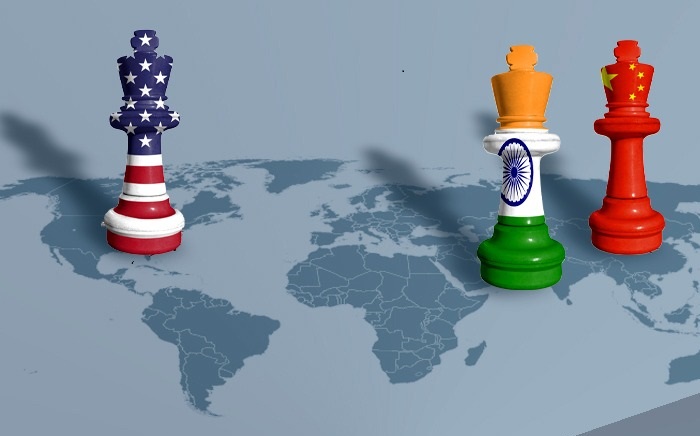
The explanations for each development are given separately as practical and defensive. Together, they are a glimpse of something greater: the Indian Ocean is emerging as a chessboard of competing external powers. And like colonialism before it, this competition revolves around access. Not all modern empires annex territory. They lease ports for decades, finance infrastructure with debt, negotiate military logistics agreements, and slowly create strategic dependence slowly enough that it appears voluntary. Influence no longer arrives in the form of governors-general. It comes in the form of investment packages and security cooperation frameworks. This is precisely what makes this new form of colonization difficult to recognize.
In the 20th century, anti-colonial struggles were waged against the presence of a colonial power. The notion of sovereignty is diffused today. According to Darshana M. Baruah (2024) a small island state becomes more dependent on a larger regional power for security in return for granting it military bases. Strategic decisions increasingly show the interest of external actors, as survival itself becomes linked to them. Formally independent nations start to operate within invisible zones of influence. Those who champion this system argue comparisons to colonialism is exaggerated. After all, the agreements of today are legal! They are accepted by the governments. Roads, ports, jobs, and investment come with infrastructure projects. Military collaboration can discourage and safeguard shipping lanes. But colonialism itself was often justified within the discourse of order and development. Might and power were the terms used by the British Empire to define its control of the sea as essential for the stability of world trade. Colonial infrastructure was defined as modernization by the European powers. Exploitation was never Empire’s name; it was partnership.
The rhetoric has not altered significantly as we imagine. Take Diego Garcia. The island continues to be one of the most strategically significant military bases in the United States in the world. Yet its existence depends heavily on the historical eviction of the Chagossian population, many of whom continue to campaign for repatriation. Or think about China’s Belt and Road Initiative, which runs through the Indian Ocean via ports and infrastructure, and that the very same Belt and Road deepen Beijing’s strategic reach. Even India_ itself a victim of colonial maritime domination_ increasingly speaks the language of strategic primacy in the ocean.
All the great powers claim to be acting defensively. China fears encirclement by the U.S. and India. India is worried about China’s expansion in its sea surrounding countries. The United States is afraid that it will lose control of the Indo-Pacific. Gulf countries are worried about insecurity of supply chains and geopolitical risk. This is how spheres of influence emerge: every expansion justified as a response to another expansion. What emerges is an Indian Ocean that is not only crowded with ships, but with competing strategic claims over geography. And the people who are most affected by this transformation are rarely those shaping it.
Fishermen in the Chagos Archipelago and ports of Dijibouti have lost access to coastal waters in the areas of growing naval zones. Huge infrastructure projects cause local populations to be displaced, and environmental degradation. The smaller states such as Siri Lanka, the Maldives and Mauritius are forced to choose sides. Their sovereignty is still there on paper and is getting tighter in reality. That’s what the neo-colonialism is about: Control without rule. The tragedy is that the post-colonial world should be beyond this logic. Nations around the globe in Asia and Africa were fighting a fierce battle for their independence, to break free from outside influence on their economy and policy decisions. However, the Indian Ocean is now set to become a sea of strategic autonomy again, as bigger powers vie for influence in the region. The techniques are more advanced than ever before, but sophistication does not ease hierarchy.
So it is that the debate on the Indian Ocean is still somewhat silent. We are comfortable criticizing colonialism when it is securely in the past. We are less comfortable in identifying its contemporary manifestations, which come in legality, investment and diplomacy. The twenty first century wants influence, without accountability -Power exercised through a contract, not a conquest. Ports, however, can be weapons of domination as well as forts once were.
The Indian Ocean is not all about trade. It’s the hub of a new geopolitical struggle for control of the arteries of globalization itself. These waters once connect energy supplies, shipping routes, digital cables, military shipping and logistics and strategic chokepoints. A dominant player in them has a tremendous advantage over the global economy of the future. That is why every major power wants a foothold there. That’s why the world shouldn’t pretend that this is simply just a development or maritime security issue. Something larger is unfolding: An imperial competition for the twenty first century. The ocean is being divided again. Only this time, no one needs to raise a colonial flag.
Ayesha Saddiqua is an MA Political Science at the Universitas Islam International Indonesia. Her academic interests include international relations, geopolitics, maritime security, and postcolonial studies, with a particular focus on South Asia and the Indo-Pacific region.

 Dr. Yashwant Singh