
 Prof. Gustavo Pessoa
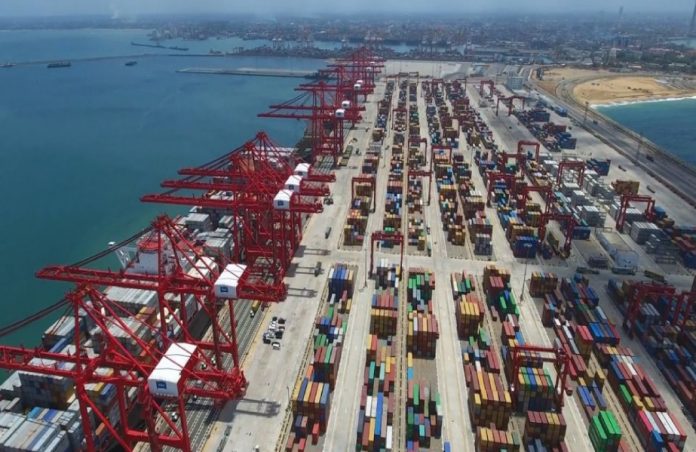
When a major shipping route comes under pressure, the first image is often a container ship waiting offshore. The less visible picture is a Sri Lankan supplier that has already paid for materials, a warehouse operator waiting for clearance, or a small exporter whose customer will not pay until the shipment arrives. A port can remain open on the map while the businesses that depend on it struggle to keep working.
Sri Lanka’s position on the east–west maritime route has made Colombo an important transshipment hub. In a 2025 discussion of South Asian ports, the World Bank identified Colombo as a major hub for cargo connected to India, Bangladesh and Pakistan. Its position is an asset in a region where connectivity has become a strategic concern. But geography does not decide the distribution of that asset’s benefits. The terms on which firms finance and insure their trade matter too.
That distinction matters for Sri Lanka’s place in the Indian Ocean. Discussion of strategic ports often revolves around which outside power builds a terminal, which government provides finance, or which carrier controls access. These are important questions. Yet a terminal’s geopolitical significance does not automatically tell us whether a Sri Lankan exporter can obtain a shipment, keep an insurance policy affordable, or survive a payment delay. Economic security must be judged at both levels.
A small apparel supplier illustrates the problem. It receives an order, buys imported inputs and pays its workers. If a disruption adds time or a buyer asks for longer terms, the supplier may need more working capital before a single invoice is settled. The example is hypothetical; it is not evidence of a particular failure. It shows why an efficient quay and a viable business are related but not identical achievements.
The first test is financing. A lender may consider an exporter creditworthy under normal delivery schedules but unwilling to extend additional credit when those schedules move. That can force a firm to use a more expensive short-term facility, accept a discount on its receivables or decline another order. A large buyer may absorb the delay more easily. The difference is not simply a question of who owns the port; it concerns who has the liquidity to use it.
Banks and trade-finance providers could work with exporters and logistics firms on products that recognise this timing risk. A facility based on verified receivables can help a supplier bridge the period between shipment and payment, provided the lender examines the buyer’s ability to pay and the terms of the underlying contract. Such lending is not a cure for a weak business model. It is a way to avoid treating a sound firm facing a temporary delay as if its goods had no value.
The second test is insurance. A policy can protect a shipment only if the buyer understands what it covers. Does it address physical damage but exclude delay? What happens if the route changes? What documents are needed after a claim, and who pays the deductible? These questions should be answered before disruption, not after cargo is held up. For small firms, a clear comparison of cover and exclusions may be as valuable as another promise that insurance is available.
The third test is information. The World Bank and S&P Global’s Container Port Performance Index measures vessel time in port, including waiting and time at berth. That is a useful measure, but it cannot tell a small exporter when its invoice will be paid or how much working capital an unexpected delay will consume. Sri Lanka would benefit from pairing operational data with practical indicators: time from cargo release to usable documents, the availability of insurance for smaller shipments, and the speed with which disputed payments are resolved. These are proposals, not claims that such statistics are absent today.
Public–private partnerships can contribute to capacity and expertise, and an Asian Development Bank evaluation found that the Colombo Port Expansion Project succeeded in its assessed objectives. A successful project, however, still needs performance commitments that people outside the terminal gate can understand. Agreements could disclose how operational interruptions are reported, how continuity plans are tested and how public responsibilities are allocated. Commercial confidentiality matters; it need not prevent disclosure of the risks that taxpayers or users could bear.
There is also a regional dimension. A route that serves several countries depends on coordination among carriers, port operators, customs authorities, insurers, banks and trading firms. One operator cannot remove every delay. But a tabletop exercise involving those parties can reveal where a warning stops, which documents are duplicated and how smaller exporters receive help when normal arrangements fail. The outcome should be a short, public account of the lessons rather than a promise that disruption can be eliminated.
For Sri Lanka, this is not an argument against foreign investment or against competition among maritime powers. It is an argument for asking more precise questions of every partnership. Who maintains essential services? Who pays when an interruption lasts longer than expected? Can local firms access the information and finance that allow them to keep trading? And which costs would ultimately reach the public balance sheet?
A port’s strategic value is often expressed in the number of vessels it can attract. That is one part of the story. Its deeper value lies in the economic relationships that continue to function when a route is tested. Sri Lanka’s position gives it a place in the Indian Ocean. Reliable finance, usable insurance and credible continuity plans can help turn that position into durable security for the businesses that live from trade.
Gustavo H. R. Pessoa is an economist and professor at Fundação Getulio Vargas in São Paulo, Brazil. He holds a PhD in Business Administration from FGV EAESP, with a focus on Finance. His writing addresses financial regulation, payment systems and international economic policy, with particular attention to how institutional arrangements affect businesses and households. His international publications include contributions to LSE Business Review, the Lowy Institute’s The Interpreter and the United Nations University Institute on Comparative Regional Integration Studies. He also serves on the International Relations Commission of Corecon-SP.
Selected references
World Bank. “Maritime Ports: Regional Trade and Shared Prosperity in South Asia.” 2025. https://www.worldbank.org/en/events/2025/01/15/maritime-ports-regional-trade-and-shared-prosperity-in-south-asia
World Bank. “The Container Port Performance Index.” https://www.worldbank.org/en/topic/transport/publication/cppi
Asian Development Bank. “Sri Lanka: Colombo Port Expansion Project.” 2016. https://www.adb.org/documents/sri-lanka-colombo-port-expansion-project

 Dr. Yashwant Singh