 Patrick Omam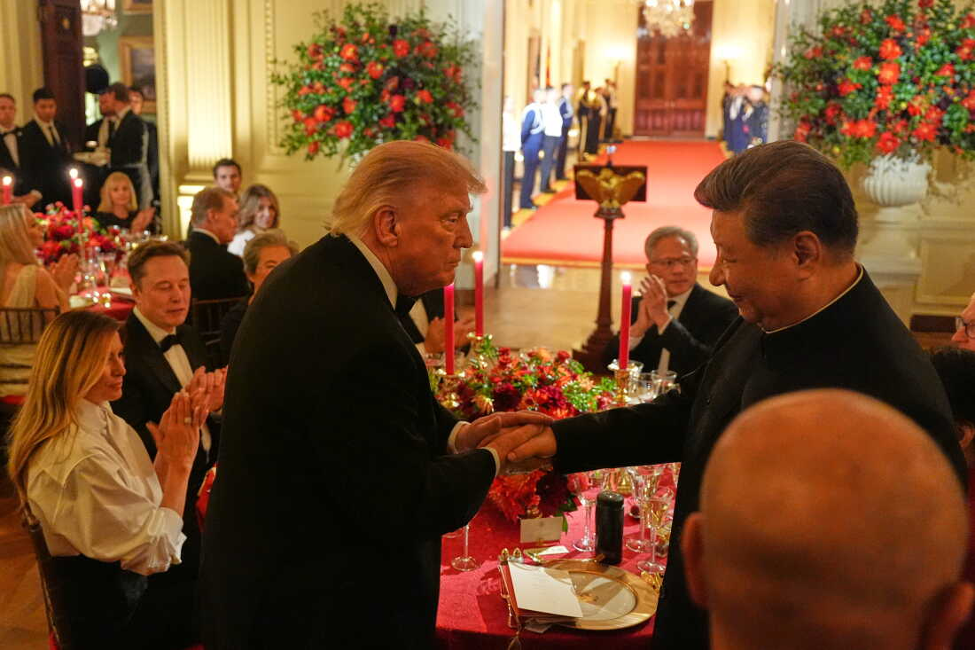
As world leaders gathered in New York city for the 81st session of the United Nations General Assembly, the bilateral meeting between President Trump and President Xi Jinping could not be overshadowed.A high level visit opposing the world’s leading economies on issues relating to trade, international conflicts and AI competition and development.
A unique opportunity for both global powers to incorporate the United Nations’ main theme of restoring trust and managing transformation.
Extending Deadlines For Trade Appeasement
President Trump’s stance on tariffs remains firm.
For the White House resident, tariffs are central to US trade policy. The president continues to impose tariffs on foreign nations – and allies are not spared. But concessions are always to be made when China is involved.
while Canada faces mounting economic pressure from its neighbour. Arguably weakening the deteriorating relationship started under Canadian Prime Minister Trudeau – and still seeking its revival under Prime Minister Carney. China seeks stable ties and fair dealings from its US peer.
As tensions between the US and China remain central for the internal dynamics of the Indo-Pacific – talks surrounding the purchase of Chinese goods, US technological restrictions and rare mineral earth deals remain a top priority for negotiations. For China, this ambiguous environment is profitable. Especially in the field of rare mineral earth.
Xi Jinping’s government profits from its vast rare mineral reserves and a long-standing state-sponsored refining capacity.
A reality the US government can only fathom.
Sidelined, Washington observes how Beijing asserts its dominance in a modern critical field – strongly linked to telecommunication, renewable energy production and future technologies.
For now, all these factors safeguard the occasionally strained US-China relationship.
And by extending deadlines in the hope of trade appeasement, Trump guarantees future strategic engagement between both superpowers.
The Island To Be Conquered
China has long maintained its strategic framework towards Taiwan. For Beijing, Taiwan is an integral part of China – and denying it fundamentally undermines its rightful sovereignty.
For Washington’s policymakers, Taiwan is a strategic regional ally. One worth investing and arming to navigate the shifting geopolitical dynamics of the 21st century. This situation has sparked calls by the US administration to provide arms package to Taiwan – overtly challenging China.
These overarching tensions between China and the United States represent a security dilemma. Xi Jinping perceives it as a Thucydides trap – arguing that when a rising power challenges an established one, the guaranteed outcome is military force.
A scenario both nations want to avoid.
Xi’s profound attachment to China’s reunification is critical to a peaceful Indo-Pacific. But US meddling in Taiwanese affairs have thwarted it. As the island’s primary security guarantor, the US administration retains its sight on its $14 billions arms deal.
And strengthened cooperation with the Taiwanese authorities.
As to whether the US arms deal will be greenlighted by Beijing – or accepted through concessions – China remains firm. As Xi Jinping will not allow the US administration to undermine his credibility and political ambitions. A test of confidence for the regional hegemon in securing its survival and interests.
This supposes that no policy shift is to be expected from China. And Taiwan will remain the island to be conquered.
Diverging AI Perspectives
The world of startups and entrepreneurial minds continues to rush in artificial intelligence – and international politics follows through. Unfortunately, in comparison to the big tech world, political superpowers radically diverge in pace and outcomes regarding AI.
China’s open-source AI model strategy has shaped a competitive environment.The Indo-Pacific superpower has created an ecosystem built on collaboration – accelerating China’s AI presence and dominance. This approach reinforces national strength and allows Chinese labs to challenge international competitors.
For Beijing, global superpowers should dictate the growth and pace of AI – a scalable technology in need of gatekeeping. A shared responsibility, China and the US must control for the well-being of the people. American labs like OpenAI, Anthropic and Google lead in transformative technologies and the acute risks associated with AI.
A direct result of the massive capital inputs in US tech companies. Hoping administrative blocks and legal orders from the White House will impede Chinese evolution in AI technologies.
Washington’s lack of strategic vision mirrors two diverging AI perspectives.
While Beijing understands the need for cooperative and sustained development in artificial intelligence – a restrictive US approach favours competition at all costs. It’s hard to argue that the competition-driven US approach will be sustainable.
Xi Jinping and the Chinese entrepreneurial gurus understand China’s need to incorporate its technological developments in its economy – setting a global standard for all. While US Big Tech firms seek to rush with great capital, China wants to oversee a viable and lasting future with AI.
For now, each side is well placed to engage other world powers in developing AI capacities. But, China remains calculated and preventive. Arguably a sign of Chinese wisdom and prudence – which can be traced back to decades of development.
Evidently proving China’s restrain capacity as a rising power – both regionally and internationally.