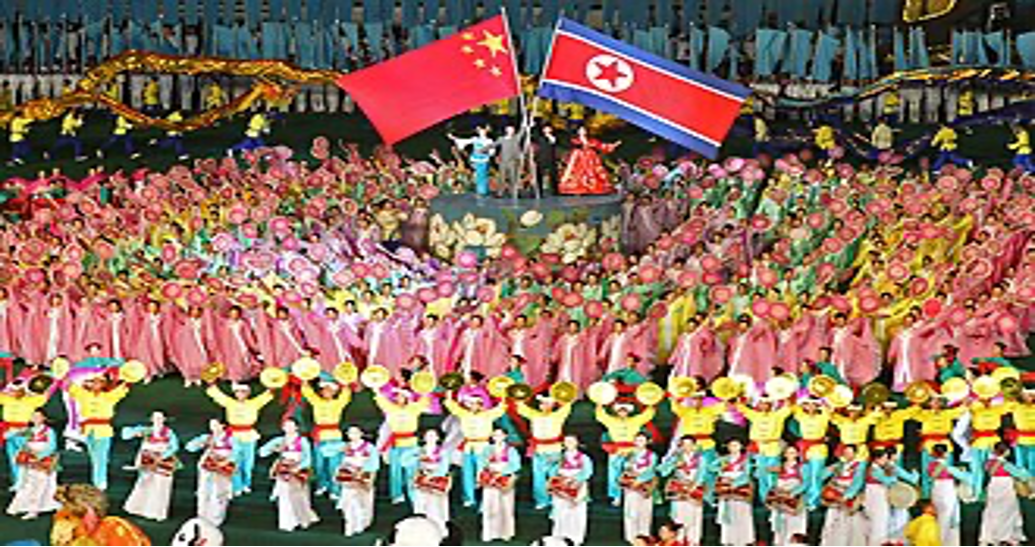
For the past decade, China has strengthened its regional ambitions and strategic collaboration with North Korea. Both the Belt and Road Initiative (BRI) and the Global Development Initiative (GDI) have been at the forefront of Xi Jinping’s governance promoting development through international cooperation. Notably incorporating internationally secluded nations such as North Korea, in a forward-looking policy framework benefitting its partner economically and socially.
The Global Development Initiative has served as an economic catalyst, reshaping the asymmetric Sino-North Korean relationship. Even in spite of relative fears relating to North Korea’s nuclear development, China has directly engaged with its partner – hereby asserting a new approach to economic resiliency and cooperation.
For years, the North Korean leadership under Kim Jong-un has faced a highly isolated position characterized by severe sanctions and restricted access in international forums. This limited presence has drastically affected North Korea’s economic development and participation in foreign markets. For Pyongyang, this ambiguity has fed its shadow economy through illicit activities, where a complex network of state sponsored enterprises guarantee the state’s financial survival.
With the latest reports estimating North Korea’s GDP at $16.447 billion and a GDP per capita of $640, the state is amongst the most precarious nations in the world. North Korea remains dependent on its peers to deepen its domestic and international roots – it creates a set of circumstances benefiting Chinese initiatives and economic dynamism. This critical situation positions North Korea’s leadership as a structural point of focus for Beijing.
Since 2021, exports from China to North Korea amounted to $260 million, with necessities, minerals, fertilizers and medication as primary goods of exchange. Per 2025, a 22% year-over-year increase in China’s trade with North Korea underpins the performative nature of the GDI, by improving North Korea’s market depth and exposure to international markets. Trade reports for February 2026, note a net export of $137 million from China into North Korea – indicating an increase of 58.3% from February 2025. It is clear that China has stiffened its export into the North Korean economy – further deepening its ties with a strategic regional partner.
A promising start of 2026 saw a 19% increase in exports from China to North Korea, totaling $329.5 million. Where Beijing exported 19% more soybean oil into North Korea, other export goods have followed similar trends. Leading to a gradual structural shift in the economic exchange between both nations.
Over the past 5 years, the Chinese-North Korean trade has grown at an annualized rate of 734%. These latest growth trends demonstrate the commercial opportunities and the economical breathing room the GDI offers through direct trade partnership and development.
As the trade volumes further fluctuate, the bilateral exchanges are arranged to increase and develop into other sectors – as illustrated by the emerging trend shift from simple raw material into processed goods. These economic and societal advancements are indicative of the GDI’s strengthening impact. This openness offers critical aid to North Korea – all too familiar with famines and restricted access to goods.
Beijing’s enforcement of the GDI specifically intends to develop strained economies such as North Korea’s. As Beijing continues to enhance its strategic cooperation with Pyongyang, more funds influxes, business orders, trading and foreign investments will develop. This reality creates new economic activities and markets, where direct trade effectively shreds down the limitations of North Korea’s prosperity. This will aid the local leadership in consolidating a viable industrial agricultural sector and a thriving economy.
This growth in inter-state exports resonates with Xi Jinping’s inclusive and balanced development expected from his partners. The decision reflects a policy-driven evolution of the GDI: stimulating economic activities to respond to North Korea’s need.
Under these circumstances, significant amount of revenue sources can be exploited for the welfare of North Korea. As the GDI continues to function as a global platform focusing on poverty reduction and food security, North Korea can expect to improve the critical state of its grain production – a long standing issue crippling its history.
As Chinese initiatives flourish, direct engagement with North Korea focusing on innovation, digital agriculture and green development are to be expected. While China’s private sector encourages direct investment and agricultural cooperation in the region, the potential for a strengthened sustainable agricultural sector is looming. For North Korea, this expertise and collaboration is a lifeline for millions.
At its core, the GDI emphasizes economic and societal perspectives of developing countries. By revitalizing their relationship with Pyongyang, Beijing’s leadership aims to mobilize additional international initiatives.
In short, as preferential trade treatment is reinforced by North Korea, so will its opening to international markets, international development and critical resources. It is clear that the GDI is a consecration for North Korea, one Beijing will strategically implement to revive Pyongyang’s economy. Such an engagement may gradually recalibrate regional dynamics while preserving China’s influence over North Korea’s economic policy direction.