Political trajectories across nations are often influenced less by ideology than by the weight of global crises and their far‑reaching consequences. For Sri Lanka, a small island nation situated at the crossroads of the Indian Ocean, this reality is particularly pronounced. The challenge ahead is whether its political leadership will remain reactive—responding only when crises erupt—or whether it can cultivate the foresight to anticipate risks and seize opportunities before they become urgent.
In 2022, despite the lingering effects of the pandemic, the Janatha Vimukthi Peramuna (JVP) staged protests against the agreement with India regarding the Trincomalee oil tank farm, alleging that it would place the facility under Indian control. The context has shifted markedly in just a few years. Today, amid escalating tensions in West Asia and the economic fallout of the Middle East war, the JVP‑led National People’s Power government is seeking a permanent solution to Sri Lanka’s energy crisis. Foreign Minister Vijitha Herath has emphasized that redeveloping the Trincomalee oil storage facilities in partnership with India offers a sustainable path forward.
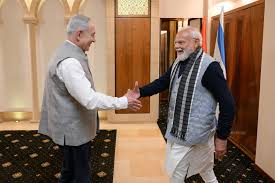
“Temporary solutions are not sustainable. We need a long‑term strategy to manage oil storage and distribution in light of global energy trends,” Herath told the media, reiterating his recent remarks in Parliament. “That is why, at the very beginning, our government signed the MoU with India and the UAE,” he added, referring to the April 2025 agreement signed during Prime Minister Narendra Modi’s visit to Colombo.
India’s interest in Trincomalee is neither new nor incidental. The port’s strategic location has long been a matter of concern for New Delhi. In 1981, President J.R. Jayewardene proposed leasing the abandoned British‑built oil tank farms to the highest bidder, but these plans were dismissed due to India’s objections. The Indo‑Lanka Accord of 1987 explicitly addressed this issue, stating: “Trincomalee or any other ports in Sri Lanka will not be made available for military use by any country in a manner prejudicial to India’s interests… The work of restoring and operating the Trincomalee oil tank farm will be undertaken as a joint venture between India and Sri Lanka.”
This clause underscored India’s determination to safeguard its strategic interests in the Indian Ocean. During his landmark 2015 visit—the first by an Indian prime minister to Colombo in three decades—Modi pledged to transform Trincomalee into a regional oil hub. “We are also focusing on new opportunities. Today Lanka IOC and Ceylon Petroleum Corporation have agreed to jointly develop the upper tank farm at China Bay on mutually agreed terms,” he said after meeting then‑President Maithripala Sirisena.
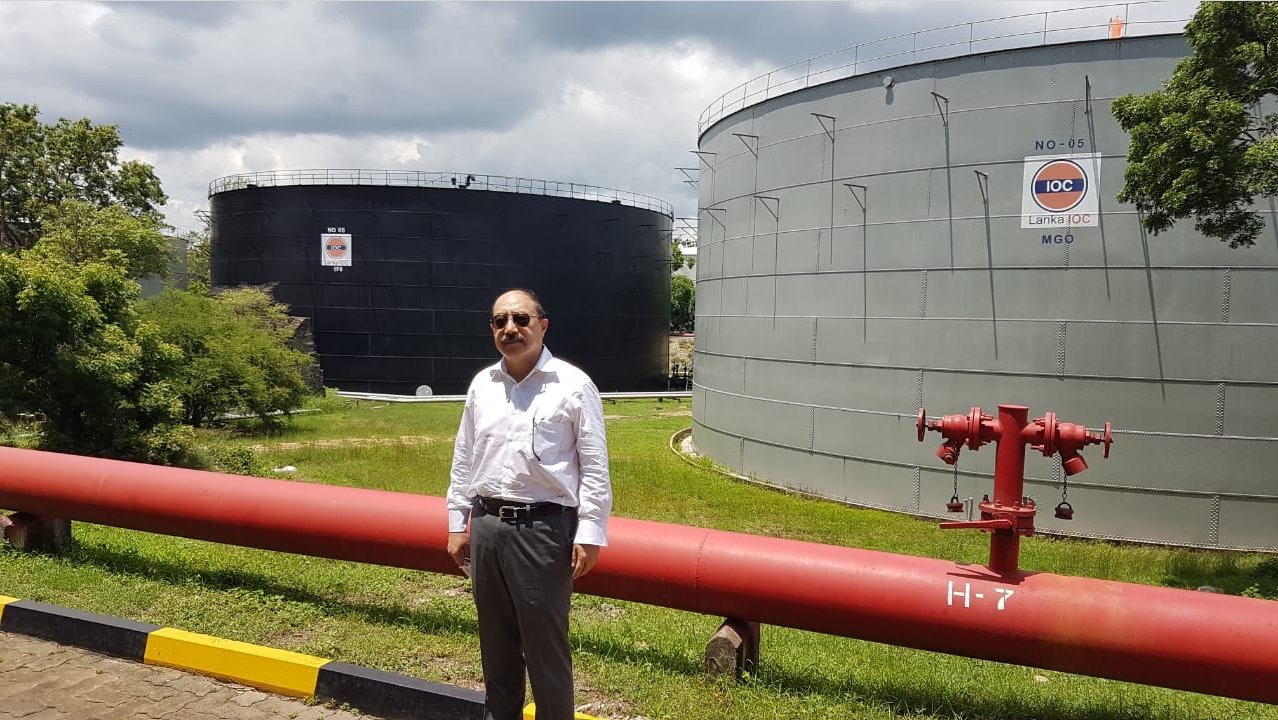
The Trincomalee Oil Tank Farm, built by the British between 1924 and the late 1930s to support Royal Navy operations, remains a strategic asset of immense potential. Comprising 99 tanks with a combined capacity of over 1.2 million tons, the facility could transform Sri Lanka into a petroleum hub for South Asia. The British recognized Trincomalee’s value as a logistical base, strategically positioned to store fuel transported from the oil fields of the Arabian Gulf for operational use in the East.
Despite this potential, progress has been slow. The Indo‑Lanka Accord envisioned joint development, but civil war and recurring anti‑Indian rhetoric stalled implementation. In 2003, following a ceasefire agreement between the LTTE and the Ranil Wickremesinghe-led UNP government, 15 tanks were leased to the Indian Oil Corporation for 35 years. Since then, the idea of developing Trincomalee with India has resurfaced repeatedly but yielded little progress. In 2017, the Sirisena government agreed to jointly develop the remaining 85 tanks, but the plan was abandoned amid opposition. At the time, the JVP and the Ceylon Petroleum Corporation (CPC) Trade Union filed cases in the Supreme Court seeking a stay order against the proposal to establish a joint venture between the CPC and Lanka Indian Oil Company (LIOC). They argued that the move amounted to handing over the oil tank farm to India through questionable means. Later, in 2022, the Gotabaya Rajapaksa government signed an agreement with India to develop 61 tanks, but political instability once again delayed implementation.
Against this backdrop, in 2025, India, Sri Lanka, and the UAE signed a trilateral Memorandum of Understanding to jointly develop Trincomalee. The agreement, involving the Indian Ministry of Petroleum and Natural Gas, the UAE Ministry of Investment, and Sri Lanka’s Ministry of Energy, was designed to enhance Sri Lanka’s energy security and integrate the country into regional energy networks.
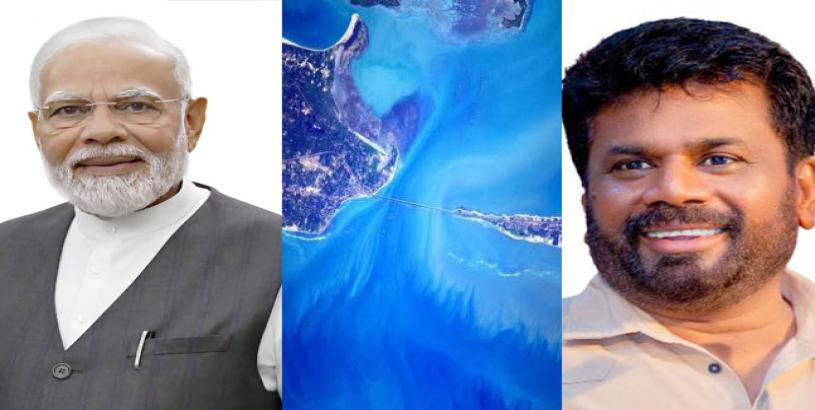
Yet, despite the signing of agreements, Sri Lanka’s track record of slow‑moving projects with India raises concerns. During President Anura Kumara Dissanayake’s recent visit to New Delhi for the AI Impact Expo 2026, Prime Minister Modi raised questions about the delays in Indian‑backed projects.
It is a familiar pattern in Sri Lanka: agreements are signed with India, but implementation drags on. The government’s latest announcement to move forward with the Trincomalee project in the wake of the Middle East war is welcome, but it must not remain mere lip service prompted by external tensions. As one former Indian naval officer observed, Colombo is “sitting on a gold mine at the Trincomalee naval base without realizing its value.” India continues to extend opportunities, yet Sri Lanka’s leaders risk failing to capitalize on them.
Despite the JVP’s history of resistance to development projects, the electorate has now entrusted them with the responsibility to correct past missteps. Sri Lanka’s energy future is inseparable from India’s, and progress cannot be achieved by distancing itself from its closest neighbor or by stalling joint initiatives. The historic lesson is clear: without India, the island nation cannot move far.
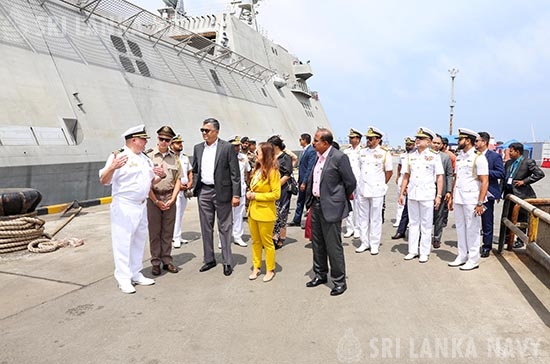
The ongoing war in the Middle East has underscored Sri Lanka’s vulnerability. The sinking of the Iranian naval vessel IRIS Dena in the Indian Ocean near Sri Lanka, killing dozens of sailors, was a stark reminder that conflicts in West Asia can spill into the Indo‑Pacific. Washington justified the strike by arguing the vessel was a legitimate military target, while Iran claimed the ship had been invited by Sri Lanka.
As a consequence of the war, Iran has increasingly used the Strait of Hormuz as leverage, threatening global energy flows. More than 80 percent of the oil and liquefied natural gas (LNG) shipped through the Strait in 2024 was destined for Asian markets. Observers warn that a war against Iran could escalate into another Ukraine‑style conflict, with devastating consequences for global energy security.
For Sri Lanka, the lesson is clear: it cannot safeguard its energy security alone. The Trincomalee project, developed in partnership with India and the UAE, is not just an option—it is a necessity. In a world where distant wars can disrupt local economies, Sri Lanka must act decisively to secure its future.