Synopsis
In 2026, intensifying great-power rivalry and regional geopolitical competition are likely to continue shaping a fragmented global threat environment. In parallel, non-state armed groups driven by religious, ethnic, and ideological motivations are assessed to remain persistent threats to governments and social cohesion, particularly across parts of Asia, Africa, and the Middle East.
While terrorist activity is expected to remain concentrated in existing conflict zones, a smaller number of attacks in Western countries will continue to generate disproportionate political and media impact. State sponsorship of militant proxies, the diffusion of low-cost technologies, and the exploitation of unresolved conflicts are likely to complicate counter-terrorism and stability operations throughout 2026.
Introduction
Insurgent and terrorist entities are expected to continue mounting attacks across Asia, the Middle East, Africa, Latin America, and Western states in 2026. However, the overwhelming majority of incidentsassessed at over 90 percent—will likely occur in active conflict zones, including Sudan, Mali, Somalia, Libya, Nigeria, Afghanistan, and Pakistan.
By contrast, fewer than 10 percent of attacks are expected to occur in North America, Europe, Australia, and New Zealand. Although statistically limited, attacks in Western countries are likely to draw disproportionate attention, shaping public perceptions of insecurity and influencing domestic political discourse.
Accordingly, the primary theatres of terrorism in 2026 are assessed to remain in the Global South, particularly in Africa, South Asia, and parts of the Middle East.
Western Threat Environment
The smaller number of attacks staged in Western countries will nonetheless continue to attract global attention, particularly where incidents involve lone-actor or family-based dynamics. Security services assess that as long as segments of migrant and diaspora communities remain poorly integrated, extremist narratives will continue to circulate across physical and digital spaces, creating conditions for episodic violence.
Intelligence and law-enforcement reporting indicates that radicalisation pathways increasingly combine online propaganda ecosystems with offline social networks. Enhanced intelligence cooperation and surveillance capabilities are expected to disrupt the majority of plots during planning and preparation stages. However, decentralised mobilisation and online radicalisation will remain persistent challenges throughout 2026.
Global Context and Priority Regions
Africa
As in 2025, the majority of terrorist activity in 2026 is assessed to remain concentrated in the Global South, with Africa accounting for the highest proportion of incidents. Security assessments indicate that approximately 60–70 percent of terrorist attacks are likely to occur across North, West, East, Central, and Southern Africa.
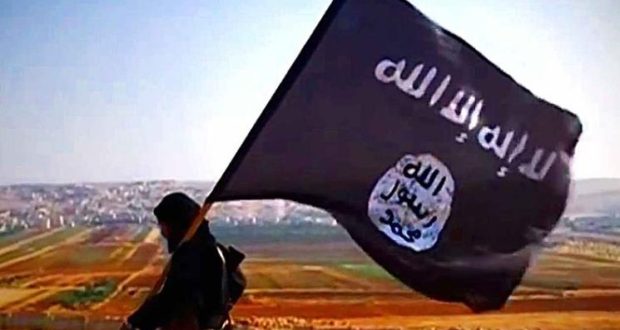
Islamic State and Al-Qaeda affiliates operating on the continent are expected to remain among the deadliest terrorist organisations globally, driven by persistent conflict environments, weak governance, and expanding territorial control in parts of the Sahel, the Horn of Africa, and Central Africa.
The Sahel in particular is assessed to remain the most volatile sub-region, with Islamic State in the Greater Sahara (ISGS) and Jama’at Nusrat al-Islam wal-Muslimin (JNIM) continuing to expand influence across Mali, Burkina Faso, and Niger. External security partnerships, including Russia’s Africa Corps, are likely to reshape local power balances without fundamentally resolving underlying instability.
Middle East
The epicentre of global terrorism has increasingly shifted from the Middle East toward Africa and South Asia. Nonetheless, the Middle East remains a significant secondary theatre, with active threat groups operating in Iraq, Syria, Lebanon, Yemen, and Gaza.
Iran’s Axis of Resistance—comprising Shi’ite groups in Iraq, Syria, Lebanon, and Yemen, alongside aligned Sunni militant actors—has not succeeded in deterring Israeli military action. Intelligence assessments suggest Tehran will continue seeking to restore its regional deterrence posture through renewed support to proxy groups, despite recent military and operational setbacks.
With the exception of Iran, Middle Eastern governments have largely rejected terrorism as an instrument of state policy. Following the Gaza conflict after the Hamas-led attack on Israel in October 2023, regional public sentiment indicates limited appetite for renewed large-scale violence, even as instability persists.
South Asia
Militant violence in South Asia is assessed to remain elevated in 2026. Intelligence reporting suggests that attacks by Tehrik-e-Taliban Pakistan (TTP) targeting Pakistani security forces and civilian infrastructure are likely to exceed those conducted by Islamic State Khorasan Province (ISKP).
TTP operations mounted from Afghan territory risk exacerbating tensions between Afghanistan and Pakistan. While full-scale interstate conflict remains unlikely, sustained cross-border militant activity could increase escalation risks if left unmanaged. Similarly, terrorist attacks or miscalculated military responses involving India and Pakistan carry the potential for crisis escalation between two nuclear-armed states, even if neither side seeks open war.
Extremist activity in Bangladesh is assessed to be increasing, creating conditions that could enable future terrorist violence. Intelligence reporting indicates growing interaction between Bangladeshi Islamist networks and regional militant actors. As a result, religious minorities—notably Hindus and Christians—may face heightened risk of targeted attacks in 2026, particularly in areas with weak local governance.
Southeast Asia
The terrorism threat in Southeast Asia has significantly diminished, although residual Islamic State and Al-Qaeda-linked networks continue to operate at a low level. Regional counter-terrorism cooperation has constrained organisational capacity and territorial influence.
Nonetheless, intelligence reporting indicates that limited foreign terrorist fighter mobility persists, including short-term travel to conflict-affected areas such as Mindanao. While such movements do not necessarily indicate imminent attack planning, they underscore the continuing risk of transnational linkages and ideological spillover beyond the region.
Indonesia’s dismantling of Jemaah Islamiyah and Malaysia’s disruption of Islamic State-linked networks illustrate the impact of sustained intelligence-led counter-terrorism efforts.
Diaspora and Transnational Radicalisation
Security services assess that Islamic State and Al-Qaeda continue to exploit overseas labour and diaspora environments for recruitment and facilitation. While the vast majority of diaspora communities remain law-abiding, isolated cases of recruitment and mobilisation persist, particularly in jurisdictions with limited monitoring and integration capacity.
Hybrid and Irregular Threats
Beyond terrorism, 2026 is likely to see continued reliance on hybrid and irregular warfare, including the use of proxies, militias, cyber operations, disinformation campaigns, and economic coercion. These tools enable both state and non-state actors to pursue strategic objectives while maintaining plausible deniability.
Geopolitical rivalry between major powers is assessed to be increasingly exploited by militant and criminal networks, complicating international cooperation and creating permissive environments for extremist activity.
Policy Implications and Strategic Considerations
Governments may consider a range of measures to mitigate evolving threats in 2026, including:
- strengthening oversight of extremist exploitation of religious and digital spaces
- enhancing scrutiny of charities and financial networks linked to militant actors
- expanding community-based prevention, rehabilitation, and reintegration initiatives
- improving intelligence sharing on state-sponsored proxy networks
Such measures should be calibrated to national legal frameworks and civil-liberties protections, and implemented in partnership with community stakeholders to preserve social cohesion.
Conclusion
Global terrorism is assessed to remain a persistent and adaptive threat in 2026, driven by extremist ideologies, unresolved conflicts, and state-sponsored proxy warfare. Although most attacks will continue to occur in conflict zones, spillover effects will shape security perceptions worldwide.
Without enhanced international cooperation and sustained upstream prevention efforts, threat actors will continue to exploit gaps in global security systems. In a polarised international environment, political will, strategic restraint, and pragmatic cooperation will be essential to mitigating shared security risks in the year ahead.