Transnational terrorism continues to cast a long shadow over South Asia, reminding the region that extremist violence is never confined within national borders. The recent attack in Pahalgam, Kashmir—where Pakistan-sponsored terrorists killed twenty-six civilians—followed by India’s counter-terrorism operation, Operation Sindoor, underscores this grim reality. The threat is not isolated; it reverberates across the subcontinent. Pakistan-based Lashkar-e-Taiba (LeT) has already signaled the possibility of another 26/11-style strike via sea routes, rekindling memories of the 2008 Mumbai attacks. Terrorist organizations in South Asia remain ideologically aligned, sharing targets and enemies. Sri Lanka, too, has come under their gaze, most tragically during the ISIS-backed Easter Sunday bombings of 2019.
This raises a pressing question: how will Sri Lanka confront the menace of transnational jihadist terrorism? The government’s proposal to introduce a draft Protection of State from Terrorism Act (PSTA) has ignited fierce debate. The existing Prevention of Terrorism Act (PTA)—in force for 45 years—has long been criticized as draconian, both domestically and internationally. Originally introduced in 1979 by President J.R. Jayewardene as a temporary measure during the civil war, it was later made permanent. While the PTA was justified during the conflict with the LTTE, which was designated a foreign terrorist organization in many countries, its relevance after the group’s defeat in 2009 has been increasingly questioned, particularly by Tamil political parties and civil society groups.
International pressure, particularly from the European Union, has consistently urged Sri Lanka to reform its anti-terrorism laws in line with international human rights standards, warning that failure to do so could jeopardize continued access to the European market through GSP+ trade preferences. In 2021, the European Parliament passed a resolution expressing “serious concern at the rapid deterioration of human rights” on the island and condemning Sri Lanka’s continued reliance on the draconian PTA.
Since the end of the civil war, successive governments have failed to honor commitments made to the EU. The Sirisena administration pledged repeal in 2015 and even drafted a replacement bill, but the initiative stalled after being challenged in the Supreme Court. Against this backdrop, the National People’s Power (NPP) government declared its intention to abolish “all oppressive acts, including the Prevention of Terrorism Act (PTA), and ensure civil rights of people in all parts of the country.” By this statement, the NPP government itself acknowledged the PTA as an oppressive law that has long dominated the nation. Yet critics argue that the new proposal falls short of these promises, raising doubts about Sri Lanka’s willingness to deliver genuine reform.
The reality is clear: Sri Lanka cannot afford to overlook the growing threat of transnational terrorism. At the same time, the Prevention of Terrorism Act (PTA) has faced longstanding criticism for constraining civil society space and, at times, being perceived as a tool for political misuse. Tamil parties and civil society groups in the north continue to call for its outright repeal, arguing that existing laws are sufficient to address terrorism. Yet, in light of escalating transnational threats across South Asia and complex geopolitical dynamics, the importance of a specialized legal framework cannot be dismissed. The challenge, therefore, lies in crafting legislation that both safeguards national security and upholds the principles of justice and equality.
Easter Sunday: A Turning Point
Sri Lanka’s previous discussions on terrorism had largely been domestic. But the 2019 Easter Sunday attacks turned the country’s understanding upside down. Just as the 9/11 attacks forced sweeping changes in U.S. counter-terrorism laws, Sri Lanka’s Easter shock reshaped the national security debate.
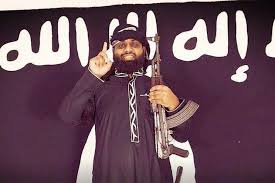
The Easter Sunday bombings were the deadliest international terrorist attack since 9/11—a series of coordinated suicide blasts carried out by “ISIS in Sri Lanka,” rooted in Kattankudy, a predominantly Muslim town in the Eastern Province. In late April 2019, ISIS leader Abu Bakr al-Baghdadi praised the attackers, portraying the bombings as retaliation against “the West” for the group’s defeat the previous month in Baghuz, Syria. This endorsement underscored that Sri Lanka had entered the radar of global jihadist networks. The shadow of transnational terrorism over Sri Lanka did not end with Easter Sunday. The shadow of transnational terrorism over Sri Lanka did not end with Easter Sunday. In October, the U.S. Embassy in Colombo warned its citizens of a possible attack, citing a plot targeting Israelis in Arugam Bay. Indian intelligence had also issued prior alerts, with local media reporting statements from the Acting Inspector General of Police.
Later, the U.S. Department of Justice revealed details of a plot allegedly involving Farhad Shakeri, described as an “Iranian asset,” who was instructed by the Islamic Revolutionary Guard Corps (IRGC) to target Israeli tourists and orchestrate a mass shooting. In March 2025, the Sri Lankan government disclosed attempts to propagate extremist ideologies within the Muslim population in the Eastern Province. Public Security Minister Ananda Wijepala confirmed that most such activities were reported from Kalmunai, highlighting evidence of a breeding ground for Islamic extremism.
The Easter Sunday attacks were vivid proof of how vulnerable the state was in handling transnational terrorism—even though Indian intelligence had warned of such a threat beforehand. In this context, it became clear that even with the PTA in place, Sri Lanka remained exposed to jihadist ideologies that could be attracted, organized, and coordinated within its borders.
The Definition Dilemma
One of the most persistent criticisms of the PTA is its failure to clearly define terrorism. This ambiguity has left the law vulnerable to misuse and weakened its credibility both domestically and internationally. The government’s new proposal seeks to address this gap by drawing on established international precedents.
Globally, definitions of terrorism vary—there is no “one-size-fits-all.” Yet several authoritative frameworks provide useful guidance. UN Security Council Resolution 1566 (2004) describes terrorism as “criminal acts, including those against civilians, committed with the intent to cause death or serious injury, or taking hostages, with the purpose of provoking terror, intimidating a population, or compelling a government or international organization to act or abstain.” Crucially, the resolution declared that such acts are never justifiable on political, ideological, racial, or religious grounds.
As a leading actor in counter-terrorism, the United States adopts a layered approach. Under Executive Order 13224, terrorism is defined as “violent acts dangerous to human life, intended to intimidate civilians, influence government policy, or affect government conduct through mass destruction, assassination, kidnapping, or hostage-taking.” The Terrorist Exclusion List (TEL) expands this to include hostage-taking, the use of weapons to endanger public safety, or conspiracies to commit such acts. Meanwhile, the Foreign Terrorist Organizations (FTO) statute defines terrorism as “premeditated, politically motivated violence against noncombatant targets by subnational groups or clandestine agents.”
India’s Unlawful Activities (Prevention) Act frames terrorism as “any act threatening the unity, integrity, security, or sovereignty of the country, or intended to strike terror among its people.” The European Union, through Directive 2017/, emphasizes acts that “seriously intimidate a population, compel a government or international organization to act or abstain, or destabilize fundamental political, constitutional, economic, or social structures.”
By aligning with these international standards, Sri Lanka’s new proposal represents progress. The challenge now is to ensure that definitions are applied fairly, without discrimination or political misuse, so that the law strengthens national security while upholding democratic values.
The Way Forward
Sri Lanka cannot afford complacency in an era of transnational terrorist threats. The Easter Sunday attacks proved that terrorism here is not just a domestic challenge—it is global, with local networks exploited by movements from Lashkar-e-Taiba to Hamas. This reality underscores the geopolitical dimension of terrorism: extremist groups thrive on regional fault lines, porous borders, and imported ideologies.
Sri Lanka now stands at a crossroads. The debate over the PTA and the proposed PSTA is not about legal technicalities—it is about the country’s identity as a democracy under siege. Repealing the PTA without a replacement would be reckless; enacting a new law without safeguards would be dangerous. The task is to build legislation strong enough to protect the state, yet fair enough to protect its people.
The path forward must rise above slogans of repeal or repression. What is needed is a serious, balanced conversation—one that secures national safety while preserving civil liberties. Strong laws are essential, but they must be just. Security is vital, but it must never come at the expense of democracy.