“Operation Sagar Bandhu” is the latest term to enter the lexicon of India’s neighbourhood relations. India has launched this initiative to provide humanitarian aid to Sri Lanka in the wake of Cyclone Ditwah, which unleashed devastating floods and landslides. The nation is grappling with severe challenges: so far, more than 1.1 million people have been affected, with 355 confirmed deaths and 366 people still missing across the country.
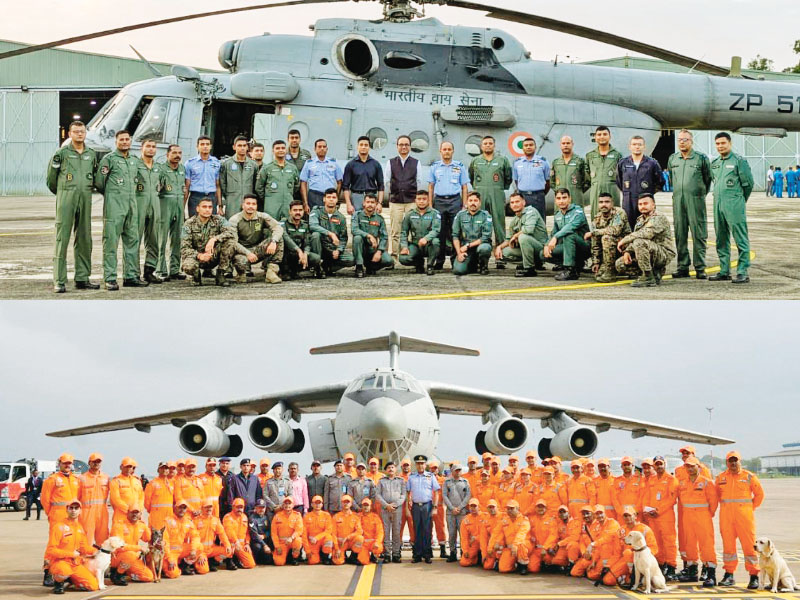
In the immediate aftermath of the cyclone, India announced Operation Sagar Bandhu and swiftly dispatched the aircraft carrier INS Vikrant, carrying 80 personnel—including four women and 76 men—as well as four specially trained rescue dogs. Indian Air Force Mi-17 helicopters have also joined the mission. On the ground, teams from the National Disaster Response Force (NDRF)—India’s specialized agency for disaster response, search and rescue, and humanitarian assistance—are working tirelessly across Sri Lanka to save lives. According to reports, more than 27 tonnes of aid have already been delivered to Colombo by air and sea under this operation. Even after the cyclone moved on, floods have continued to affect the northern and eastern parts of the country. Amidst these ongoing challenges, the Indian Naval Ship (INS) Sukanya docked at the Port of Trincomalee, delivering additional relief supplies to the hardest-hit communities.
This mission firmly aligns with India’s “Neighbourhood First” policy and Vision MAHASAGAR, strengthening India’s credentials as a dependable first responder across the Indian Ocean region. The roots of the “Neighbourhood First” policy was officially laid down in 2008, emphasizing the crucial importance of nurturing close ties with neighbouring countries. Through this policy, India focuses on boosting economic, diplomatic, and strategic cooperation with countries such as Afghanistan, Bangladesh, Nepal, Bhutan, Sri Lanka, and the Maldives.
History demonstrates that whenever a crisis arises—whether caused by nature or human actions—India is almost always the first to offer aid to Sri Lanka, regardless of whether a formal request has been made. Although the Colombo government has at times shown mixed feelings toward India, India has consistently proven to be a steadfast friend and reliable partner, unwavering in its support for Sri Lanka during challenging times
During Sri Lanka’s historic economic crisis, it was India alone that emerged as the country’s lifeline. As Ranil Wickremesinghe aptly noted, India provided the “breath of life” needed for Sri Lanka’s survival. Even as Sri Lanka was making a fragile recovery from economic hardship, another crisis struck. Staying true to its Neighbourhood First policy, India—having already extended $4 billion in support during the economic crisis—once again stepped in immediately with relief operations and humanitarian assistance.
Sri Lanka is to India what a shoulder joint is to the body—inseparable. Geographically, politically, economically, and in terms of security, the two nations are closely bound. The latest climate change-induced disaster serves as yet another reminder of their interconnected destinies. Sri Lanka suffered immense loss during the tragic 2004 tsunami, and now faces another ordeal with the recent floods. While the human toll this time is lower than during the tsunami, the economic consequences have been severe. These experiences underscore the importance of Sri Lanka collaborating with India to strengthen disaster resilience. In the realm of natural disasters, a crisis in India will inevitably reverberate in Sri Lanka.
India remains committed to deepening connectivity with Sri Lanka, with multiple projects under discussion. However, some initiatives may arouse skepticism, and like previous administrations, the current JVP-led government in Sri Lanka displays some reluctance. Nonetheless, regardless of any illusions the ruling party in Sri Lanka may hold or the fears that may trap the ruling elites, the geographic realities and proximity of both countries will ultimately shape their shared future.