As tensions escalate in the Middle East, many global actors have failed to correctly identify the source of the conflict. A section of Sri Lanka’s political circles appears caught in the same blind spot. German Chancellor Friedrich Merz suggested that Iran should not be protected by international law, remarking that “now is not the time” for Europeans to lecture the United States and Israel about legality—effectively turning a blind eye to accusations that their attacks on Iran broke international law. What lessons has Sri Lanka learned from this war politics in the Middle East?
When it comes to Israel, many in Sri Lanka instinctively align with its adversaries. The Samagi Jana Balawegaya (SJB), the main opposition party, condemned U.S.–Israel actions against Iran, calling them violations of international law and the UN Charter. Predictably, pro‑Iran Muslim politicians in the opposition criticized Israel and denounced the government’s silence. Opposition leader Sajith Premadasa, along with several MPs, demanded parliamentary debate on the war against Iran—a regime that openly chants “Death to the U.S.” and “Death to Israel.”
Such uproars are not difficult to understand. They reflect appeasement tactics aimed at courting Muslim voters against the ruling party. History offers parallels: President Ranasinghe Premadasa once squandered resources by setting up a Mossad Commission, illustrating how Sri Lankan politics has repeatedly entangled itself with Israel in curious ways.
Meanwhile, leftist groups unequivocally condemned the U.S. and Israel for eliminating Ayatollah Ali Khamenei and for their operations against Iran, labeling these as acts of military aggression against Tehran. The National People’s Power (NPP) government, however, has been cautious in its wording regarding the ongoing operations and tensions in the Middle East. Government spokesperson Nalinda Jayatissa concluded: “Our stance is clear: Sri Lanka should not become a pawn or a victim in this war. We are committed to preventing these conflicts through words and deeds.”
But whose war is truly unfolding in the Middle East? Many wrongly accuse Israel of pursuing a “Greater Israel” agenda. The fact remains: the conflict was triggered by Iran’s proxy attack on October 7, 2023, which killed more than 1,200 innocent men, women, and children—including 46 Americans—in the most brutal terrorist assault in Israel’s history. Alongside these killings, Hamas took 254 hostages, among them 12 Americans. Those in Sri Lanka who now condemn Israel did not denounce Iran’s aggression, yet today they speak in defense of Tehran’s clerical regime.
Iran is unique in openly declaring itself an enemy of both the U.S. and Israel, chanting “Death to Israel” and “Death to America.” Prime Minister Netanyahu recently described Iran as “fifty North Koreas”: while North Korea’s nuclear arsenal serves deterrence, Iran pursues weapons with the explicit agenda of destroying Israel and the United States. Since 1985, Iran has waged proxy wars against Israel, backing Jihadi terrorist groups while covertly advancing its nuclear program. Israel and the U.S. have consistently sought to dismantle this threat. When diplomacy fails, war realism becomes unavoidable—a reality underscored during Trump’s administration, when Tehran rejected U.S. diplomatic efforts.
For Sri Lanka, the question is how to respond. Historically, Colombo’s stance has oscillated: D.S. Senanayake was the first Asian leader to recognize Israel, but later governments distanced themselves under the banner of non‑alignment. Sirimavo Bandaranaike’s Sri Lanka Freedom Party (SLFP) shut down Israel’s embassy and aligned with the Palestine Liberation Organization, led by Yasser Arafat—who notably visited Iran just days after the 1979 revolution. Since then, support for the Palestinian cause has shaped Sri Lanka’s rhetoric, even as global views on Palestine have shifted.
The Palestinian issue continues to influence Sri Lanka’s foreign policy, often without nuance. The distinction between genuine Palestinian rights and Iran’s proxy war against Israel is rarely articulated in Sri Lankan discourse. Instead, political actors exploit the issue for domestic gain, reinforcing populist narratives that obscure the realities of Middle Eastern geopolitics.
Sri Lanka must recognize that Iran’s clerical regime is not a benign actor but a destabilizing force in West Asia. Its sponsorship of terrorist groups, pursuit of nuclear weapons, and open hostility toward Israel and the U.S. make it a far greater threat to global peace. To condemn Israel while ignoring Iran’s aggression is to misread the conflict entirely.
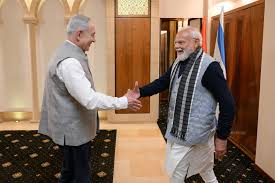
Against this backdrop, the NPP government’s approach appears to be on the right track, even as opposition forces continue to push against Israel. Since Anura Kumara Dissanayake came to power, foreign policy has been carefully handled with caution. Yet maintaining balance or neutrality should not become an obstacle to paving the way for stronger ties with Israel. New Delhi has strengthened bilateral relations with Israel while continuing to support Palestinian rights. This is the model Sri Lanka’s NPP government should follow. The government’s recent effort to expand diplomatic and labor ties with the State of Israel is a positive step, signaling a posture of strong partnership with Israel.