Blaming foreign intelligence agencies has long been a part of Sri Lankan politics, particularly among left-nationalist political blocs since the end of the civil war. During times of political turmoil, conspiracy narratives often seem normal in Colombo. Yet no clear answer has emerged as to why such powerful agencies allegedly worked against them.
Given this background, the recent claim by Asanga Abeyagoonasekera, a Sri Lankan geopolitical analyst and author, has once again sparked controversy about foreign intelligence operations in the island nation. In a recent YouTube interview, Abeyagoonasekera disclosed his conversation with former President Gotabaya Rajapaksa, who was overthrown in 2022 following the people’s uprising known as Aragalaya.
According to Abeyagoonasekera, Gotabaya Rajapaksa allegedly conveyed to him directly that his ouster was orchestrated by the American Central Intelligence Agency (CIA). He claimed this was why Rajapaksa did not use force to suppress the protest campaign, alleging that his entire defense network had been taken over by the CIA and that CIA personnel had followed him during his visit to Singapore. This statement recalls earlier remarks by Mahinda Rajapaksa, Gotabaya’s brother, who alleged that India’s Research and Analysis Wing (RAW), in collaboration with Western agencies such as the CIA and MI6, conspired to rally the opposition led by President Maithripala Sirisena against his presidency. After leaving office for nearly 50 days, Mahinda Rajapaksa told Pakistan’s DAWN newspaper: “Pakistan helped us, especially Musharraf. What happened in my country and the insurgency happening in your country, RAW is behind it.” He later repeated this briefly to The Hindu in India.
Gotabaya Rajapaksa’s claim, as recounted by Abeyagoonasekera, is not new compared with then MP Wimal Weerawansa’s assertion that the U.S. Embassy in Colombo had backed the protest campaign against them. In Colombo, politicians like Weerawansa and Udaya Gammanpila often raise such claims. In October 2018, then President Maithripala Sirisena appointed Mahinda Rajapaksa as Prime Minister before formally dismissing the incumbent Ranil Wickremesinghe. As the political outcome was being decided, Gammanpila justified the coup by claiming that the fight was not against Speaker Karu Jayasuriya or Ranil Wickremesinghe but against foreign secret services such as America’s CIA and Britain’s MI6.
Chandrika Kumaratunga, who played a key role in ousting Mahinda Rajapaksa in 2015, denied these claims and interestingly suggested it was “Vibar” and not RAW. She stated: “We can manage our own affairs…. Because he expected to win the election, he was in shock when he lost, and tried to look for scapegoats.”
The Easter Sunday carnage of April 2019 is another vivid example of how conspiracy narratives continue to haunt Sri Lankan politics. The then president initially claimed the attack was carried out by the Islamic State but later suggested India was behind it. Sirisena even made serious allegations at a weekly cabinet meeting, accusing Indian intelligence of “trying to kill” him, though adding that Prime Minister Narendra Modi might not have been aware of the plan. This echoed Mahinda Rajapaksa’s earlier claim that “RAW was behind it, but Prime Minister Modi wasn’t aware.” Following tensions, Sri Lanka’s foreign ministry denied the allegation, and Sirisena later assured Modi in a phone call that he had never made such a remark.
JVP leader Anura Kumara Dissanayake, now the president, also entered the debate, once claiming that “Jaffna has become a den of RAW,” alleging infiltration aimed at destabilizing the region. In October 2019, former JVP MP Dr. Nalinda Jayatissa—then serving on the Parliamentary Select Committee—told the BBC Sinhala Service that he believed India was behind the April 21 Easter Sunday attacks. He is now a minister and the cabinet spokesperson of the NPP government.
While political circles in Colombo are struggling with these conspiracy narratives, Cardinal Malcolm Ranjith viewed the Easter carnage through a different lens. He declared that “international conspirators” had used a few “misguided Muslim youth” to carry out the attack, citing a report in Divaina newspaper that claimed ISIS leader Abu Bakr al-Baghdadi was sheltered by the U.S. Two years later, in April 2021, he clarified: “My comments have been misunderstood. I never said there is no Islamic extremism or expansionism in the country. I wasn’t referring to any political force. I was talking about Wahhabism and how it might be a tool used by certain powerful countries. I wasn’t referring to any local political forces or leaders.” His contradictory statements raised questions about whether he was indirectly pointing at the United States.
Until the Easter Sunday attack, Abu Bakr al-Baghdadi—the founder and leader of ISIS—remained a mysterious figure, with rumors swirling since 2014 that he was wounded or dead. After the Sri Lanka bombings, he reappeared and claimed responsibility, calling them revenge for ISIS’s losses in Syria. In October 2019, he reportedly died by suicide during the American Operation Kayla Mueller. Cardinal Ranjith indirectly referenced this operation in his remarks.
Looking back, spy stories in Colombo politics are riddled with contradictions. Gotabaya Rajapaksa allegedly blamed the CIA, while Mahinda Rajapaksa accused RAW alongside the CIA and MI6. Sirisena accused RAW of plotting to kill him, then denied it. During the Easter Sunday carnage, some JVP leaders pointed to India, but later dropped the issue once in power. Cardinal Ranjith hinted at foreign involvement, and then contradicted himself.
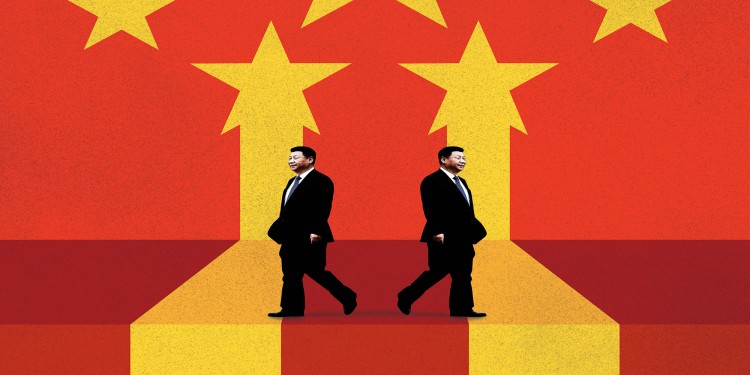
Sri Lanka’s political debate has long revolved around spy narratives, often casting suspicion on India and the United States. Yet this fixation risks obscuring a more pressing reality. CrowdStrike’s 2025 Global Threat Report identifies Chinese espionage agencies as the most active worldwide, surpassing even the CIA. In 2024, China’s cyber operations expanded by 150 percent, while attacks on financial services, media, manufacturing, and industrial sectors surged by 200 to 300 percent compared to the previous year. This trend signals a shifting global intelligence order, and unless Colombo moves beyond its outdated assumptions, it may find itself dangerously exposed to Beijing’s growing shadow.
 Dr. Yashwant Singh