
BNP Victory: Amid high expectations, the Bangladesh Nationalist Party (BNP)-led coalition has claimed victory in Bangladesh’s 13th parliamentary election. Jamaat-e-Islami, securing 68 seats, is now positioned as the main opposition party. What are your thoughts on the significance of this outcome?
Bangladesh has two streams: one that is mainly Islamist and anti–1971 Liberation War, and another that is secular and pro–1971 Liberation War. In this election, the latter was absent. So what we have is democracy among only half of Bangladesh, a half that, if independence in 1971 had been a clear victory, would not exist in today’s Bangladesh. In light of history, I do not see much light. In the short run, how things turn out will depend on how the BNP government and its leader, Tarique Rahman, behave. In the long run, this election is not a solution.
India–Bangladesh Relations: Under Sheikh Hasina’s Awami League government, New Delhi enjoyed close ties with Bangladesh, treating it as a key strategic partner in maintaining South Asian security. In your opinion, how might India–Bangladesh relations evolve under a BNP-led government, particularly with Tarique Rahman at the helm, given concerns that this transition could be more challenging?
Tarique Rahman might warm up to India while showing zero tolerance toward the Awami League. This could create a short-lasting equilibrium in India–Bangladesh relations. Tarique Rahman has an opportunity to be a statesman. I have spoken with many people about this, and no one believes he has become one. The rest remains to be seen.
Pakistan’s Role: Some observers suggest that Islamabad may see opportunities for renewed engagement, particularly with Jamaat-e-Islami, whose ideological outlook aligns more closely with Pakistan. What are your thoughts on this potential dynamic? Moreover, given the increasing military and strategic engagement between the two countries, some foresee the risk of rising extremism in Bangladesh. How do you assess this concern?
Extremism rose in Bangladesh in July–August 2024, and Pakistan entered Bangladesh like floodwater through a broken dam. To date, they are reigning. Tarique Rahman and the BNP represent a softer version of this trend, what they would call moderate Islam, similar to the BNP’s rule from 2001 to 2006. Pakistan and the BNP are ideologically aligned as well. One can easily guess how difficult it will be for Tarique Rahman to stay sincere to any commitments, if such commitments exist, toward India, while his ideal Bangladesh is a parallel of Pakistan.
Geopolitical Alignments: BNP’s ties with China appear to be strengthening, giving Beijing greater influence among India’s neighbors. Meanwhile, the United States has begun making overtures to Jamaat e Islami as part of a balancing strategy. How do you assess these shifts, and what challenges might they present for India?
Personally, I do not believe all these countries are as obsessed with Bangladesh as the people of Bangladesh tend to think. India cannot avoid Bangladesh because the two countries share a long border. What we have seen so far is that whichever stream gains victory in Bangladesh through its maneuvers, India, China, and the United States ultimately work with them. India sometimes could not work with the BNP in the past because of the dominance of jihadists and terrorists, who posed direct threats to India’s security.
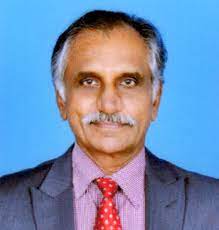
Mohammad Harun Al Rashid is a seasoned Bangladeshi career diplomat from the 20th batch of the Bangladesh Civil Service (Foreign Affairs) cadre, having joined in 2001. He was appointed Ambassador of Bangladesh to the Kingdom of Morocco on 11 October 2023, following earlier assignments as Minister and Deputy High Commissioner at the Bangladesh High Commission in Ottawa, Canada, and postings in Rome, Cairo, Mexico City, and Madrid.
In December 2024, he was recalled by the Ministry of Foreign Affairs but did not return to Dhaka. In March 2025, while serving as Ambassador in Morocco, he publicly criticized the Muhammad Yunus–led interim government, accusing it of fostering instability. Following these remarks, the Bangladeshi authorities canceled his and his family’s passports. Facing political pressure, Mr. Al Rashid sought asylum in Canada, where he now resides in exile. He continues to voice opposition to the interim administration through international media, portraying himself as a persecuted diplomat advocating for Bangladesh’s democratic stability.